Dry compressed air specified for your operating conditions
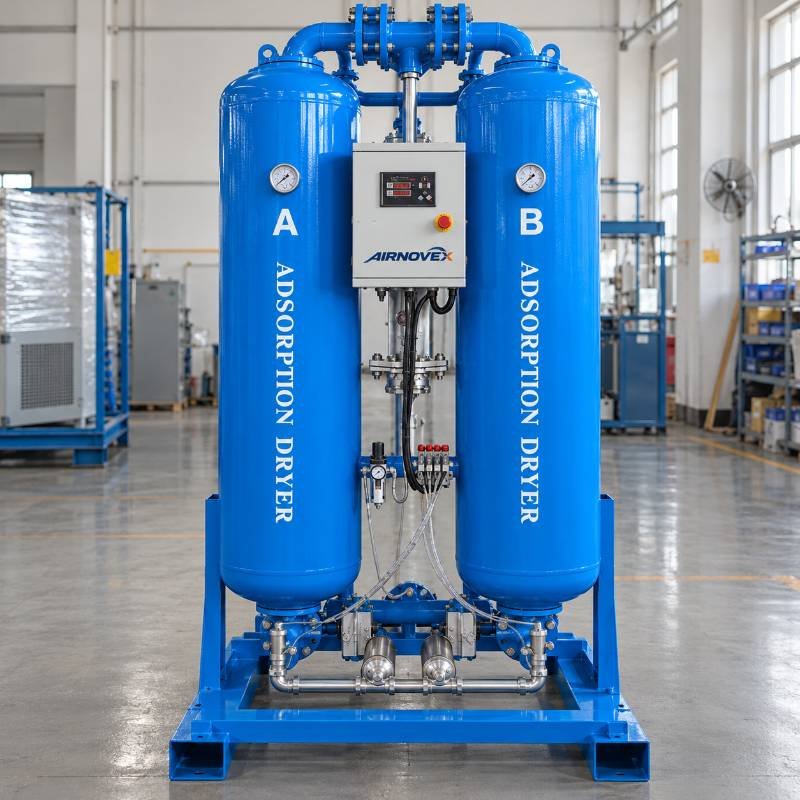
When moisture cannot be tolerated in downstream piping, controls or production equipment, drying performance must be considered alongside compressor capacity. The AIRNOVEX SJKW Series uses twin-tower desiccant adsorption with micro-heat regeneration to support applications requiring a lower pressure dew point than conventional refrigerated drying.
Nine listed SJKW models cover rated flows from 1.5 to 27 m3/min within a catalogue working-pressure range of 6 to 10 bar. Those figures provide a starting point, not a substitute for checking actual inlet conditions and the required outlet pressure dew point.
Application fit
Where low-dew-point air makes a measurable difference
Desiccant drying is worth evaluating when normal refrigerated-dryer performance cannot meet the moisture limits of the process or the temperature conditions of the distribution network.
Pneumatic instruments and automation
Moisture-sensitive valves, actuators and instrument-air circuits may need a specified low pressure dew point to reduce condensation-related problems during operation.
Cold pipework and exposed air lines
Unheated plant areas and outdoor distribution sections can cool compressed air after treatment. Specify a dew point below the coldest expected pipework temperature.
Moisture-sensitive manufacturing
Processes where water vapor affects equipment or finished output may require desiccant drying. Particle and oil cleanliness must still be addressed separately.
Tell us where compressed air is used and the dryness requirement at the point of use.
Operating principle
How twin-tower micro-heat regeneration works
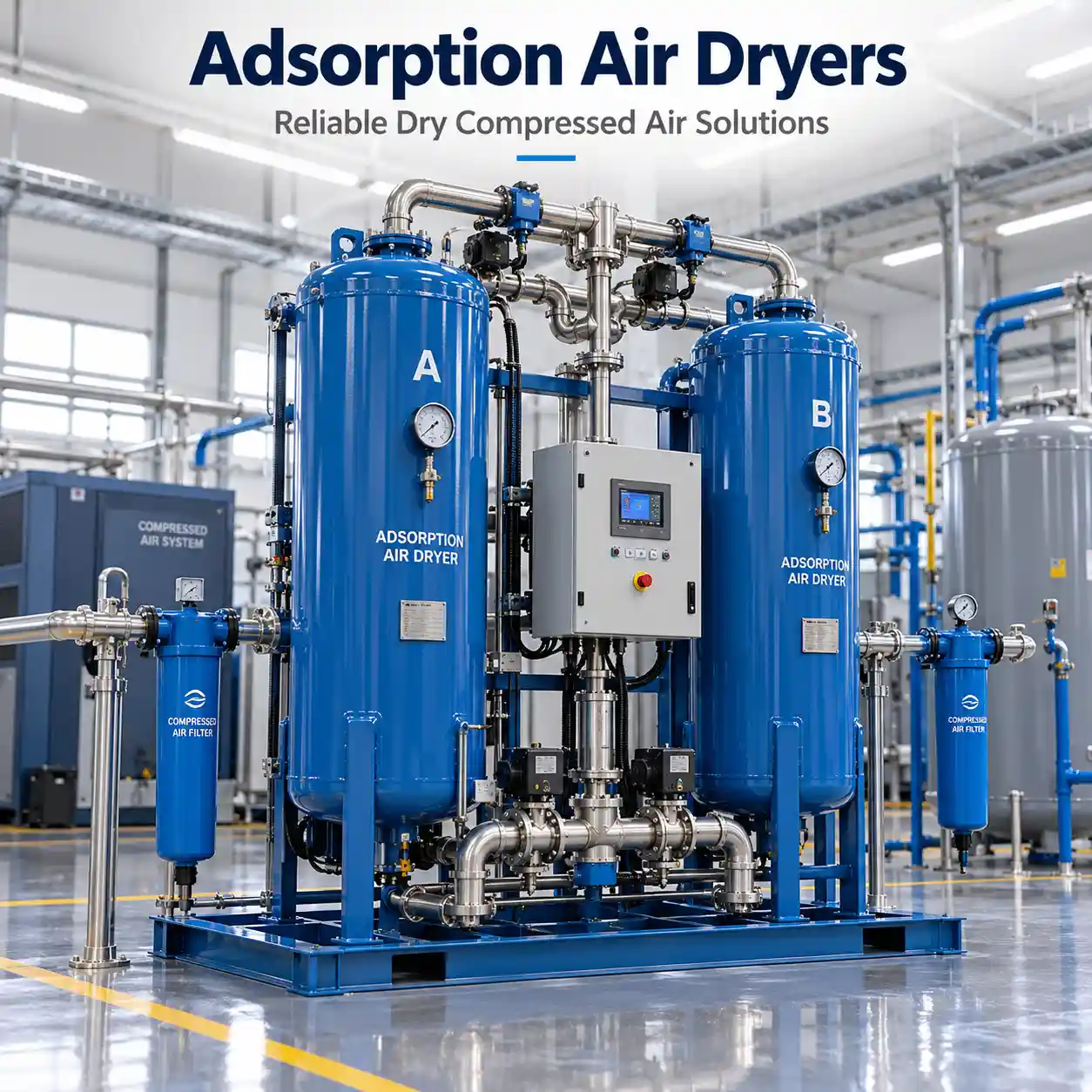
The two adsorption vessels alternate duties so that moisture capture and desiccant regeneration take place in separate stages.
Adsorb moisture
Compressed air passes through the active desiccant bed, where water vapor is retained on the adsorbent surface before treated air continues downstream.
Regenerate with heat
The off-line vessel undergoes micro-heat-assisted regeneration to remove retained moisture and prepare its desiccant for the next drying period.
Alternate the towers
The vessels exchange roles in the operating cycle. Actual purge requirements, heater duty and switching controls should be verified for the quoted configuration.
Important distinction: Micro-heat regeneration is not the same as zero-purge blower regeneration. Compare total compressed-air consumption and electrical demand before selecting a dryer solely on operating-cost claims.
Engineering selection
Select the SJKW model by corrected capacity, not the model name
The technical specifications above identify the catalogue models. For an actual installation, these four checks determine whether a listed capacity is suitable.
Maximum air demand
Use the compressor's actual delivered airflow and maximum simultaneous demand. Confirm whether any regeneration air must be allowed for when sizing the complete compressed-air system.
Pressure and inlet conditions
Check the lowest operating pressure, maximum inlet temperature and ambient conditions. The SJKW catalogue lists a 45 C maximum inlet temperature; operation near that limit still requires a capacity review.
Required pressure dew point
Specify the outlet pressure dew point needed by the process. A -45 C reference is shown for SJKW-27 in the source specifications, but it should not be assumed to apply to every model or site condition.
Electrical and connection fit
Review the selected model's connection size, footprint, weight and listed electrical data. Catalogue voltage varies across the series; confirm phase, frequency and final supply requirements before ordering.
Share the required flow, working pressure, inlet temperature and target pressure dew point.
Technology decision
Heated purge, heatless or refrigerated drying?
The best choice depends on the moisture specification and the combined cost of electrical power, lost compressed air and maintenance, rather than the purchase price alone.
Refrigerated dryer
Consider when a moderate pressure dew point is sufficient and downstream pipework is not exposed to temperatures that would cause condensation.
Evaluate: required dew point and refrigeration power.
Micro-heat desiccant dryer
Consider when the process calls for lower dew point air and the regeneration strategy should be assessed for both heater energy and compressed-air use.
Evaluate: corrected capacity, purge rate and heater duty.
Heatless desiccant dryer
Consider when simple regeneration without an electric heater is preferred, while allowing for the compressed-air consumption required to regenerate the beds.
Evaluate: purge demand and total compressor energy.
Ask for a comparison based on your operating hours, energy costs and required air quality.
System integration
Design the air-treatment line around the dryer
Drying performance depends on the equipment installed before and after the adsorption vessels. The following is a planning sequence, not a substitute for an approved piping diagram.
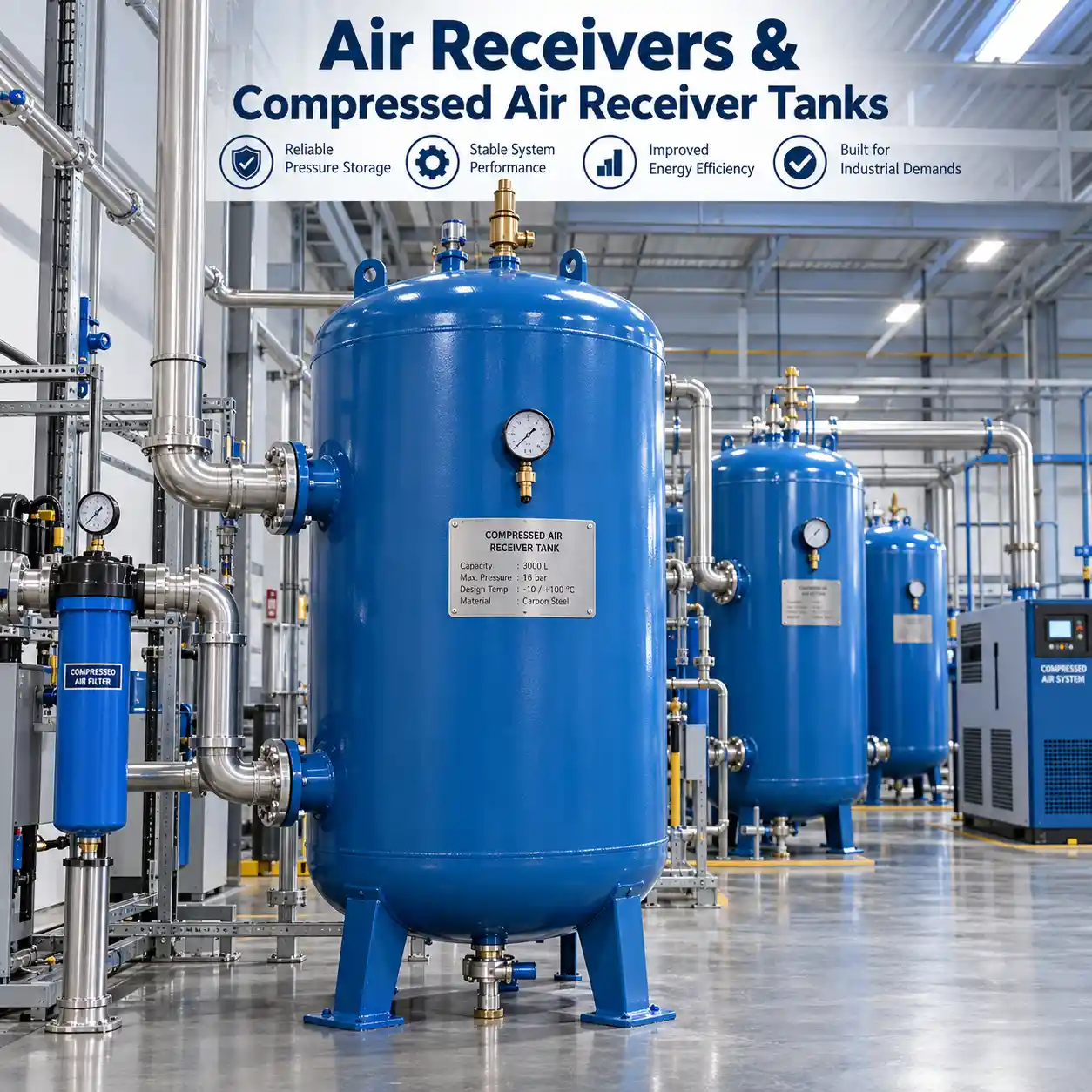
An air receiver, drains, bypass arrangements and monitoring equipment may be positioned according to the specific system design.
Before commissioning
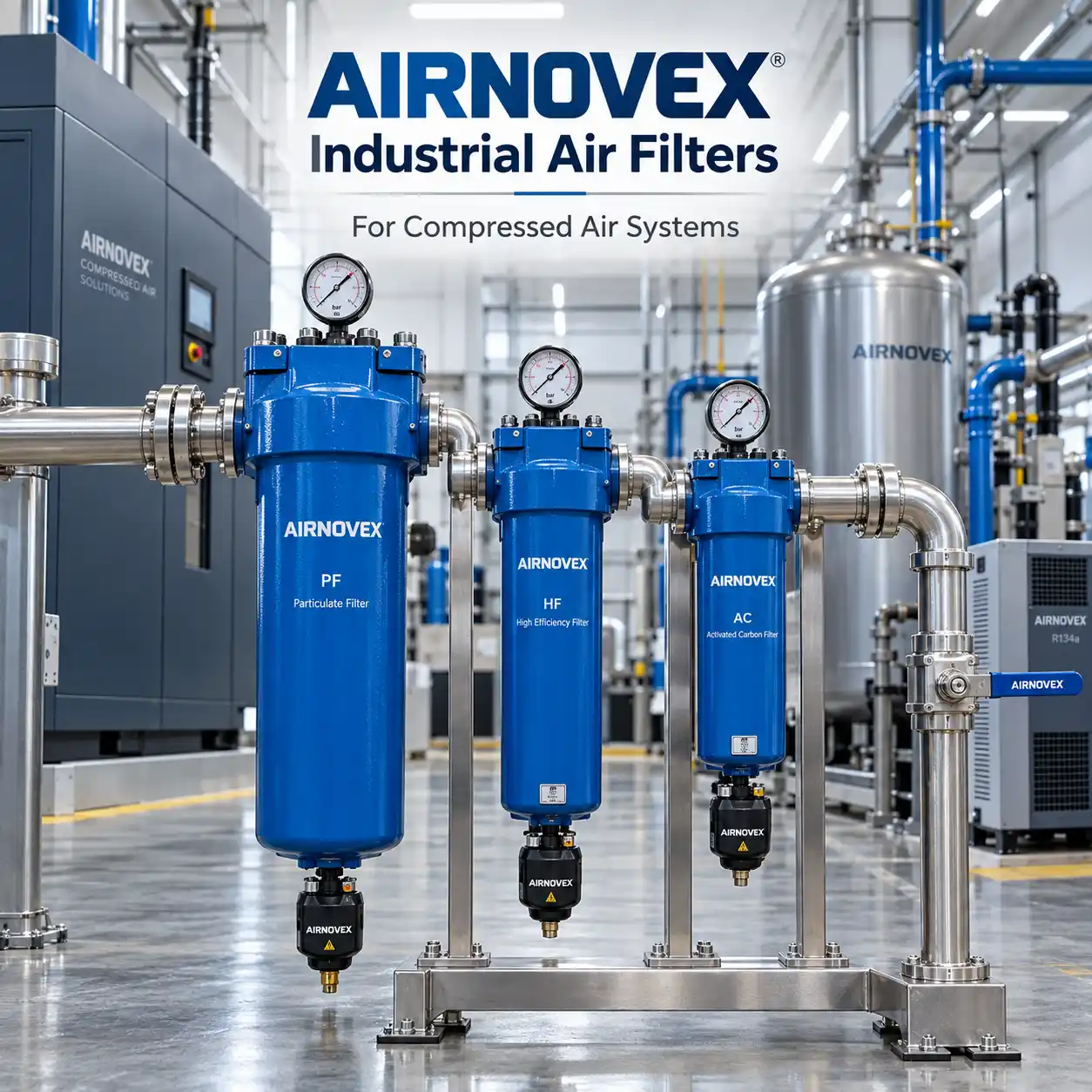
- Check inlet air quality and select suitable coalescing and particulate pre-filtration.
- Verify condensate drainage, operating pressure and the correct inlet and outlet connections.
- Confirm electrical supply, service access and safe discharge routing for regeneration exhaust.
During routine operation
- Monitor outlet pressure dew point where process reliability requires verification.
- Inspect filters, drains, switching valves and regeneration operation as directed by the equipment manual.
- Plan maintenance around pressure isolation, cooling and desiccant condition checks.
Project enquiry checklist
Get a quotation based on your actual air system
Include the following information when enquiring about an AIRNOVEX SJKW dryer. A complete operating profile makes it easier to check the model, treatment arrangement and installation fit.
Use the AIRNOVEX project enquiry form to submit your requirements.
Frequently asked questions
Questions to resolve before choosing an SJKW dryer
How do I choose an SJKW model for an 8 bar air system?
Eight bar is within the listed 6 to 10 bar working-pressure range. Choose a model only after confirming peak inlet airflow, inlet temperature, required pressure dew point and the capacity correction applicable to your operating conditions.
What pressure dew point can the SJKW Series achieve?
The source catalogue gives a -45 C reference pressure dew point for SJKW-27, but does not establish that rating for every model. Confirm the required and achievable dew point for the selected dryer and actual site conditions before ordering.
How does micro-heat regeneration compare with heatless drying?
Micro-heat regeneration uses heat to assist desiccant regeneration, while heatless drying relies on dry compressed-air purge without a regeneration heater. Compare actual purge consumption, heater power, operating hours and maintenance requirements for the proposed equipment.
Can an SJKW dryer be paired with a variable-speed screw compressor?
It can be evaluated as part of a variable-demand compressed-air system. Dryer selection must account for the compressor's maximum delivered airflow, minimum pressure and operating profile, as well as the dryer's regeneration requirements.
Does the dryer need filters and condensate drains?
Yes. Suitable upstream liquid removal and filtration protect the desiccant from moisture droplets and oil contamination. A downstream particulate filter may also be needed to capture desiccant dust. Confirm filter grades and drain locations for the complete installation.
What should be checked before installing the dryer?
Verify the model's dimensions, weight, air connections, electrical supply and available service clearance. Check that inlet conditions remain within the quoted limits and that condensate removal and regeneration exhaust routing are correctly designed.
What information should I provide to request an SJKW quotation?
Provide peak airflow, operating-pressure range, inlet and ambient temperatures, required pressure dew point, voltage, phase, frequency, application, quantity and destination. Include an existing compressor or piping specification if available.