High Pressure Screw Air Compressors for Industrial Production
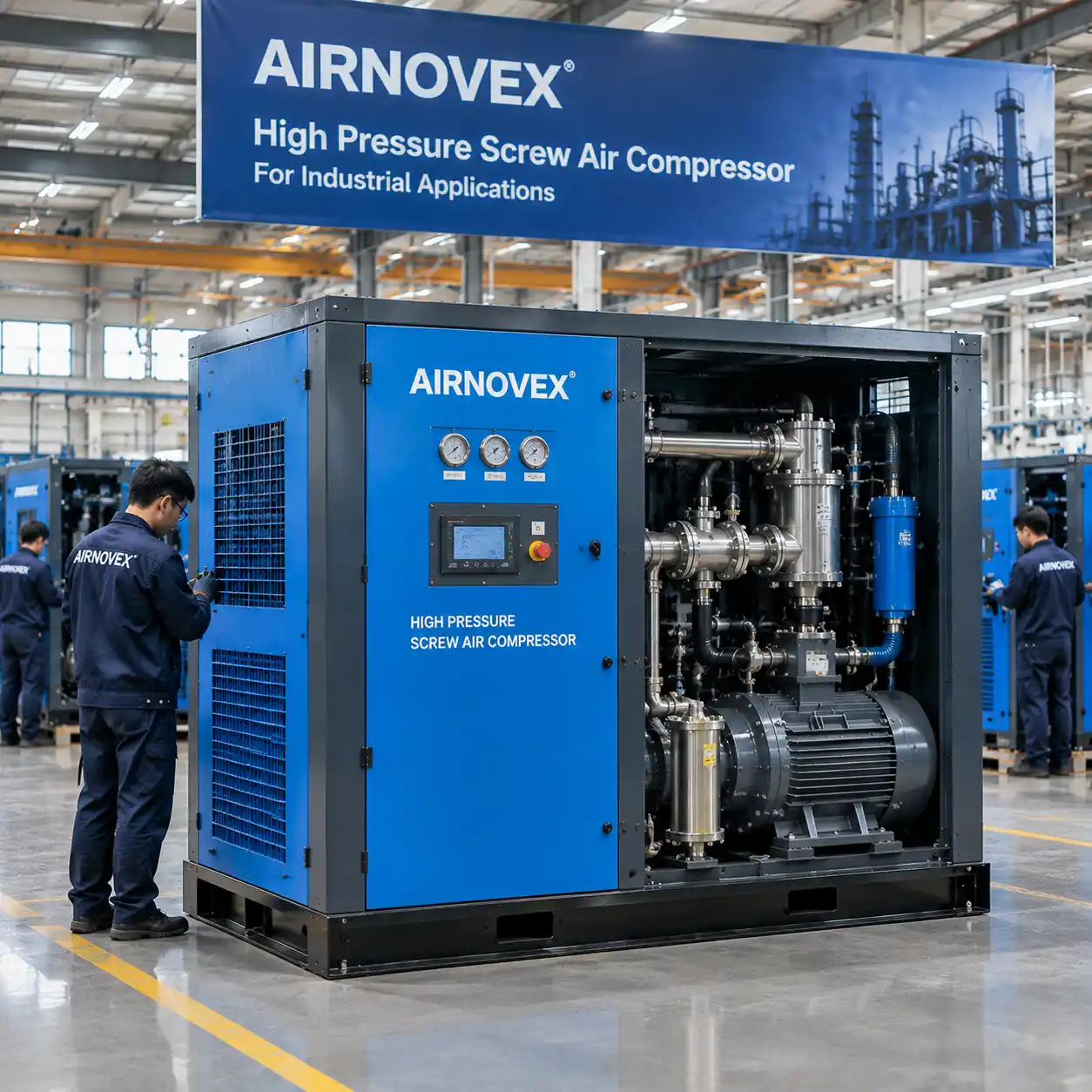
AIRNOVEX supplies high pressure screw air compressors for industrial applications that require reliable airflow above standard plant-air pressure. Available configurations include fixed-speed, variable-speed, and two-stage rotary screw compressors selected according to discharge pressure, free air delivery, operating hours, electrical supply, and site conditions.
These compressors are used where ordinary 7 or 8 bar plant air does not provide enough pressure for the process. Typical requirements include higher-pressure production lines, pneumatic equipment, industrial testing, manufacturing machinery, and dedicated compressed-air circuits. For applications requiring substantially higher pressures, such as certain PET blowing or high-pressure process systems, the compressor arrangement must be selected specifically for the required pressure and flow.
AIRNOVEX works with factories, machine builders, distributors, EPC contractors, and industrial buyers that need either a standalone compressor or a complete compressed air package. Compressor selection can include the air receiver, dryer, filtration, and other downstream equipment required by the application.
What Is a High Pressure Screw Air Compressor?
A high pressure screw air compressor is a rotary positive-displacement compressor designed to supply continuous compressed air at pressures above the level used by a standard plant-air system. Two intermeshing screw rotors compress the air as it moves through the airend, providing a steady air supply for production equipment and industrial processes.
In many factories, general-purpose compressed air operates around 6 to 8 bar. A machine or production process that requires 10 or 12.5 bar may therefore need a separate higher-pressure compressor instead of raising the pressure of the entire factory network.
The actual meaning of “high pressure” changes with the application. A 12.5 bar compressor may be considered high pressure in a conventional manufacturing plant, while PET bottle blowing, certain laser cutting systems, pressure testing, and other specialized processes can require 20, 30, or 40 bar.
Those higher pressure requirements do not automatically mean that a standard screw compressor can be operated at a higher set point. The airend, motor, cooling system, separator vessel, valves, pipework, and safety components must all be suitable for the rated discharge pressure.
For 20–40 bar projects: send the required pressure and airflow before selecting equipment. Depending on the process, the system may use a dedicated high-pressure compressor, a booster, or a combined low-pressure and high-pressure arrangement.

Why Use a Separate High Pressure Compressed Air System?
When only part of a factory needs higher pressure, producing that pressure throughout the entire compressed-air network is usually unnecessary. A dedicated high-pressure circuit allows the main plant system to operate at the pressure required by most equipment while supplying higher pressure only where it is needed.
Higher Pressure at the Machine
Production equipment receives the pressure specified by the machine manufacturer without forcing unrelated pneumatic equipment to operate at the same elevated pressure.
Better System Control
Separating standard plant air from a higher-pressure circuit makes pressure regulation, storage, and compressor control easier to match to each process.
Lower Unnecessary Compression
Compressing every cubic foot of plant air to a pressure that only one machine needs can increase power consumption. A separate pressure level avoids that approach.
High Pressure Screw Compressor Features That Matter in Daily Operation
A compressor specification should show more than motor power. Pressure, airflow, compression stages, cooling, control method, service access, and the expected load profile all affect how the machine performs after installation.
Two-Stage Compression
Selected models divide compression between two screw stages. This reduces the pressure ratio handled by each stage and gives the compressor more control over compression temperature at higher working pressures.
Continuous Air Delivery
Rotary screw compressors provide continuous airflow rather than the pulsing delivery associated with reciprocating compression. This suits production lines and processes with long operating hours.
Variable-Speed Operation
A VSD compressor changes motor speed as compressed-air demand rises or falls. It is useful where machines cycle, production volume changes, or different shifts have different airflow requirements.
Industrial Airend
Rotor profile, bearing support, lubrication, sealing, and the pressure rating of the airend determine whether the compressor can operate reliably at the specified discharge pressure.
Cooling Capacity
Higher compression ratios create additional heat. Airflow through the cabinet, cooler size, oil temperature, ambient temperature, and compressor-room ventilation all affect operating temperature.
Pressure Control
The controller monitors compressor operation and maintains system pressure within the selected control range. VSD models can adjust speed instead of relying only on load and unload cycles.
Air/Oil Separation
Oil-injected screw compressors use an air/oil separation system to recover lubricant after compression. Separator condition and correct maintenance have a direct effect on pressure drop and oil carryover.
Service Access
Filters, separators, lubricant, coolers, valves, and drive components need regular inspection. Easy access to these parts reduces unnecessary maintenance time.
Operating Protection
Temperature, pressure, motor load, electrical status, and service conditions can be monitored by the compressor control system so abnormal operation can be identified before it affects production.
Two-Stage Variable-Speed Screw Air Compressor Specifications
Available capacity changes with discharge pressure. The table below shows representative two-stage variable-speed screw compressor data across several motor sizes. Use the required pressure and free air delivery together when comparing models; motor power alone does not show whether a compressor can supply the process.
| Motor Power | Working Pressure | Air Delivery | Approx. Airflow | Outlet | Noise Level | Dimensions (L × W × H) | Weight |
|---|---|---|---|---|---|---|---|
| 22 kW / 30 HP | 8 bar / 116 psi | 4.1 m³/min | ~145 CFM | G1½ | 62 ±2 dB(A) | 1400 × 950 × 1320 mm | 700 kg |
| 10 bar / 145 psi | 3.7 m³/min | ~131 CFM | |||||
| 12.5 bar / 181 psi | 3.0 m³/min | ~106 CFM | |||||
| 37 kW / 50 HP | 8 bar / 116 psi | 7.2 m³/min | ~254 CFM | G1½ | 65 ±2 dB(A) | 1580 × 950 × 1430 mm | 800 kg |
| 10 bar / 145 psi | 6.5 m³/min | ~230 CFM | |||||
| 12.5 bar / 181 psi | 5.2 m³/min | ~184 CFM | |||||
| 75 kW / 101 HP | 8 bar / 116 psi | 16.5 m³/min | ~583 CFM | G2 | 68 ±2 dB(A) | 2000 × 1250 × 1880 mm | 1550 kg |
| 10 bar / 145 psi | 15.0 m³/min | ~530 CFM | |||||
| 12.5 bar / 181 psi | 12.0 m³/min | ~424 CFM | |||||
| 160 kW / 215 HP | 8 bar / 116 psi | 33.6 m³/min | ~1,187 CFM | DN80 / G3 | 72 ±2 dB(A) | 3000 × 1580 × 2150 mm | 2200 kg |
| 10 bar / 145 psi | 30.5 m³/min | ~1,077 CFM | |||||
| 12.5 bar / 181 psi | 27.5 m³/min | ~971 CFM |
Specifications vary by model, operating pressure, configuration, ambient conditions, and final equipment selection. CFM values are approximate conversions from m³/min. Contact AIRNOVEX for the technical data sheet of the model quoted for your application.


How a Two-Stage Screw Air Compressor Works
In a two-stage screw compressor, the pressure increase is split between two rotary screw airends. Air is compressed in the first stage, passes through an interstage temperature-control section, and then enters the second stage for final compression.
Ambient air enters through the intake filter and moves into the first compression stage. The screw rotors reduce the volume of the trapped air, increasing its pressure. Before entering the second stage, the air temperature is controlled so the next stage does not begin with unnecessarily hot inlet air.
The second airend raises the air to the final discharge pressure. In an oil-injected compressor, the air and lubricant then pass through the separation system before the compressed air is cooled and sent to the receiver or downstream air-treatment equipment.
Splitting the compression ratio across two stages can be useful when the required pressure and operating hours place greater thermal demand on the compressor. The actual performance still depends on the airend design, motor, cooling system, discharge pressure, ambient conditions, and operating load.
Single-Stage vs. Two-Stage Screw Air Compressors
Both designs are used successfully in industrial compressed-air systems. The practical difference is how the required pressure ratio is handled inside the compressor. The better choice comes from the required pressure, airflow, annual operating hours, energy use, purchase cost, and maintenance plan.
| Comparison | Single-Stage Screw Compressor | Two-Stage Screw Compressor |
|---|---|---|
| Compression | The pressure increase takes place primarily in one screw airend. | The pressure increase is divided between two screw airends. |
| Pressure Ratio per Stage | One stage handles the complete compression ratio within its rated operating range. | Each stage handles part of the total compression ratio. |
| Temperature Management | Cooling is sized around the temperature generated by one-stage compression. | Interstage temperature control reduces the inlet temperature to the second compression stage. |
| System Complexity | Fewer compression-stage components and a simpler air path. | Additional airend and interstage components increase system complexity. |
| Typical Use | Standard industrial compressed air and applications within the rated pressure range. | Continuous-duty applications where pressure, capacity, and operating hours support a two-stage design. |
| Energy Comparison | Compare the actual input power or specific power at the required pressure and airflow. Compression stage count alone is not enough to calculate operating cost. | |
| Maintenance | Fewer compression-stage components to inspect. | Two compression stages and the interstage system are included in the service plan. |
| Selection | Use actual pressure, FAD, load profile, annual operating hours, ambient conditions, and lifecycle cost to compare suitable models. | |
For a factory running a compressor for one shift per day at moderate pressure, the equipment decision can be different from a plant operating 24 hours a day near the upper end of the compressor's rated pressure. AIRNOVEX can compare both configurations from the operating data supplied with the inquiry.
Fixed-Speed vs. VSD High Pressure Screw Compressors
The main question is not whether VSD is newer technology. It is whether the plant's compressed-air demand changes enough for speed control to be useful.
Fixed-Speed Compressor
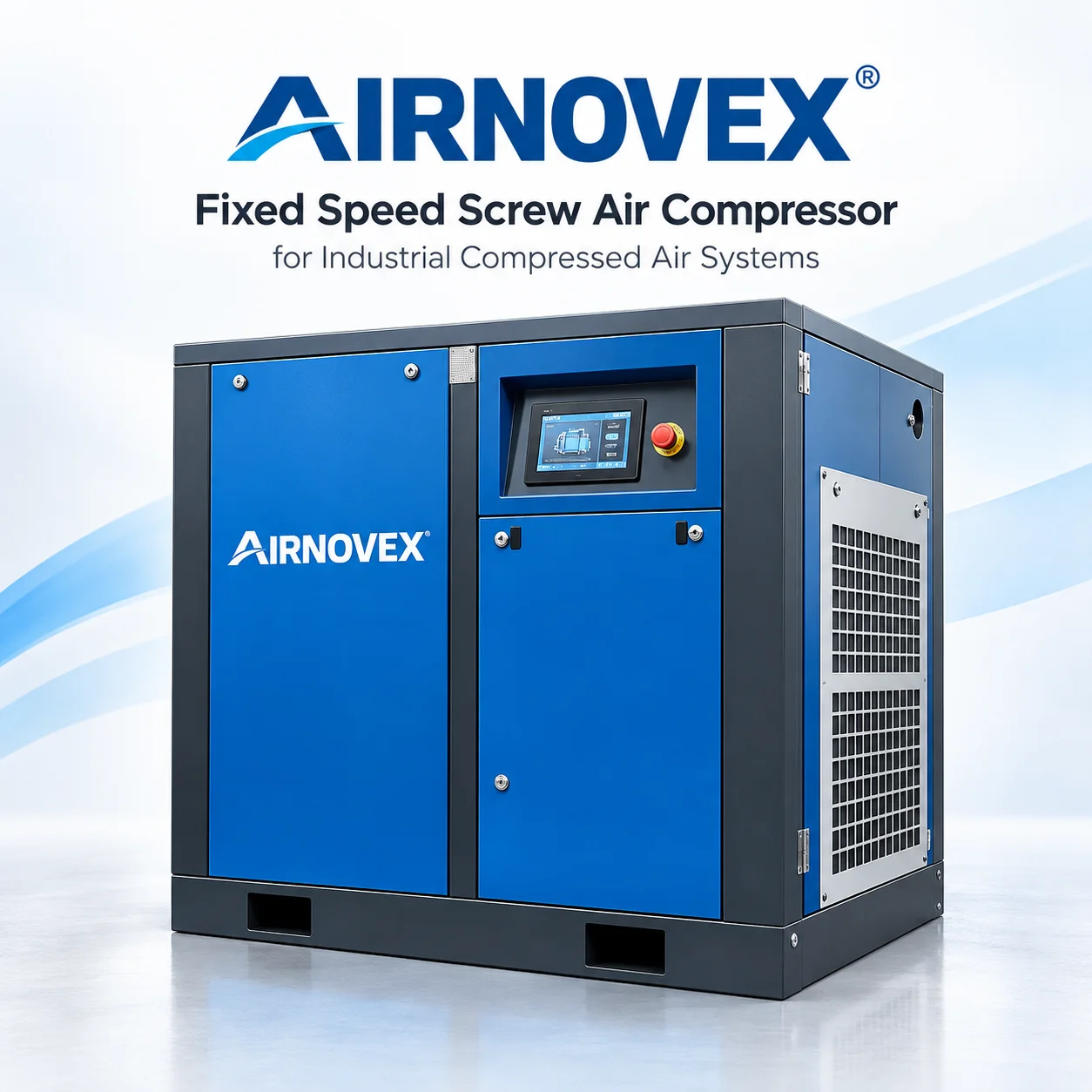
A fixed-speed compressor runs its motor at a constant operating speed and controls output mainly through load and unload operation. It is well suited to applications with a steady base load and long periods of consistent compressed-air demand.
- Air demand stays relatively stable
- Production runs for long periods at similar capacity
- The compressor operates close to full load
- A straightforward control arrangement is preferred
VSD High Pressure Compressor
A variable speed drive changes motor speed as air demand changes. Instead of producing the same output during low-demand periods, the compressor can reduce speed within its control range and follow the plant's air consumption more closely.
- Machines start and stop throughout the shift
- Air demand changes with production volume
- Different shifts have different air consumption
- System pressure needs to remain within a tighter operating band
VSD does not automatically mean lower operating cost. If a compressor runs close to full load almost all the time, a correctly sized fixed-speed machine can still be a strong choice. For plants with multiple compressors, another common arrangement is to use fixed-speed machines for base load and a VSD compressor to follow changing demand.
High Pressure Screw Air Compressor Applications
Different industries define high-pressure compressed air according to their process requirements. Compressor selection should always begin with the pressure and airflow required by the equipment using the air, not simply the industry name.
Manufacturing Plants
Manufacturing facilities use compressed air for automation systems, pneumatic tools, assembly equipment, material handling, and specialized production machines. A dedicated higher-pressure compressor can supply equipment that requires more pressure than the main factory air network.
Laser Cutting Systems
Laser cutting machines may use compressed air as an assist gas depending on the material, thickness, cutting head, and machine design. The compressor must match the pressure, flow, and air-quality requirements specified by the laser equipment manufacturer.
PET Bottle Production
PET stretch blow molding applications typically require higher-pressure air than standard factory systems. These projects should be evaluated according to bottle size, production speed, pressure requirement, and whether the system uses a dedicated high-pressure compressor or booster arrangement.
Automotive Production
Automotive factories use compressed air throughout assembly lines, robotics, tooling, and production equipment. Pressure stability and reliable airflow are important because compressed-air interruptions can affect automated production processes.
Mining and Heavy Industry
Heavy industrial environments require compressors that can operate under demanding conditions. Temperature, dust, installation location, service access, and operating hours should be considered during compressor selection.
Process Industries
Chemical plants, energy facilities, and process manufacturers may require compressed air for control systems, equipment operation, and specialized production processes where pressure and air quality requirements are clearly defined.

How to Select the Right High Pressure Screw Air Compressor
Choosing a compressor starts with understanding the operating requirement. A machine that delivers sufficient airflow at the required pressure will usually provide better results than a larger compressor selected only by motor size.
Required Working Pressure
Confirm the pressure required at the point of use. Include pressure losses from piping, filters, dryers, valves, and other downstream equipment when calculating the compressor discharge requirement.
Required Air Flow
Compressor capacity should be selected according to free air delivery at the required pressure. Consider both normal production demand and peak air consumption.
Operating Schedule
Daily running hours and production patterns influence the best compressor configuration. Continuous operation and intermittent demand require different selection considerations.
Air Demand Variation
Plants with changing air demand may benefit from VSD technology, while stable production loads may be suitable for fixed-speed compressors.
Installation Conditions
Ambient temperature, altitude, ventilation, available space, electrical supply, and maintenance access should be reviewed before installation.
Air Quality Requirements
Determine whether the process requires standard industrial air, lower moisture content, additional filtration, or special air-treatment equipment.
Before requesting a quotation, prepare the following information:
- Required pressure (bar / psi)
- Required airflow (m³/min / CFM)
- Application and production process
- Voltage, phase, and frequency
- Operating hours per day
- Installation environment
- Required air quality
Complete High Pressure Compressed Air System
A compressor is only one part of an industrial compressed air installation. The final system design depends on pressure stability, air quality requirements, storage capacity, and the equipment connected to the air network.
AIRNOVEX can evaluate the compressor together with supporting equipment such as air receivers, dryers, filters, and piping components to create a complete compressed-air solution for industrial users.
The compressor generates compressed air, the receiver helps manage short-term demand changes, dryers control moisture, filters improve air quality, and correctly designed piping helps maintain pressure at the point of use.
Why Choose AIRNOVEX for Industrial Screw Air Compressors
Industrial compressor purchasing requires more than selecting a horsepower rating. AIRNOVEX focuses on matching compressor configuration with the customer's operating conditions, production requirements, and compressed-air system design.
Engineering Support
- Compressor model selection based on pressure and airflow requirements
- Assistance with fixed-speed and VSD configuration evaluation
- Technical discussion for OEM and industrial projects
- Compressed-air system planning support
International Customer Support
- Support for different voltage and frequency requirements
- Documentation support for international projects
- Spare parts and service communication
- Distributor and equipment partner cooperation
High Pressure Screw Air Compressor FAQs
What is a high pressure screw air compressor?
A high pressure screw air compressor is a rotary screw compressor designed for applications requiring higher discharge pressure than standard factory compressed air systems. It provides continuous airflow through screw rotor compression and is commonly used in industrial production, manufacturing equipment, and specialized air systems.
What pressure can a screw air compressor produce?
Pressure capability depends on the compressor design, airend, cooling system, and rated operating range. Standard industrial screw compressors commonly operate in the lower pressure range, while higher-pressure applications require equipment specifically designed for the required pressure level.
What is the difference between single-stage and two-stage screw compressors?
A single-stage compressor completes compression mainly through one screw airend. A two-stage compressor divides compression between two stages, which can help manage compression temperature and pressure ratio in selected applications.
When should I choose a VSD high pressure screw compressor?
VSD compressors are commonly considered when compressed-air demand changes during production. They adjust motor speed to follow demand within the compressor's operating range. The best choice depends on the actual load profile of the facility.
Can a screw compressor be used for PET bottle blowing?
PET bottle blowing requires careful pressure and airflow evaluation. Some PET applications use dedicated high-pressure compressors, boosters, or combined systems. The correct equipment depends on bottle size, production speed, and required pressure.
What information is needed for a compressor quotation?
Provide working pressure, airflow requirement, application, voltage, frequency, operating hours, installation conditions, and required air quality. These details allow AIRNOVEX to recommend a suitable compressor configuration.
Does AIRNOVEX provide complete compressed air systems?
AIRNOVEX can discuss compressor packages together with related compressed-air equipment such as receivers, dryers, filters, and system components according to the project requirements.
Request a High Pressure Screw Air Compressor Quote
Tell us your operating requirements and AIRNOVEX will help evaluate the suitable compressor configuration for your application.
- Required pressure
- Required airflow
- Application
- Voltage and frequency
- Operating hours
- Installation conditions