SMT Series / Compressor Selection
Match a Two-Stage VSD Screw Air Compressor to Your Plant
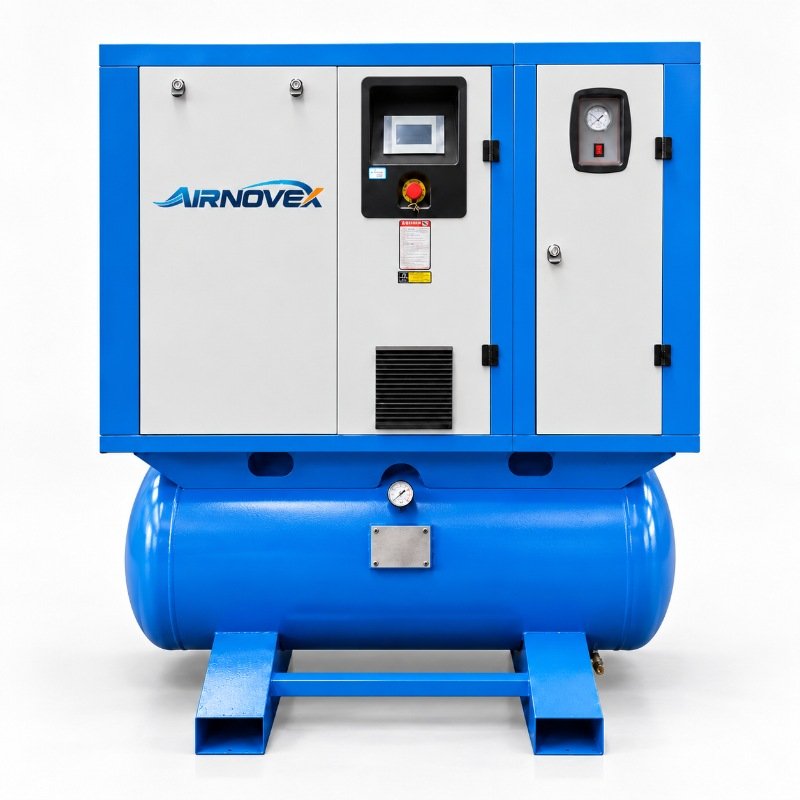
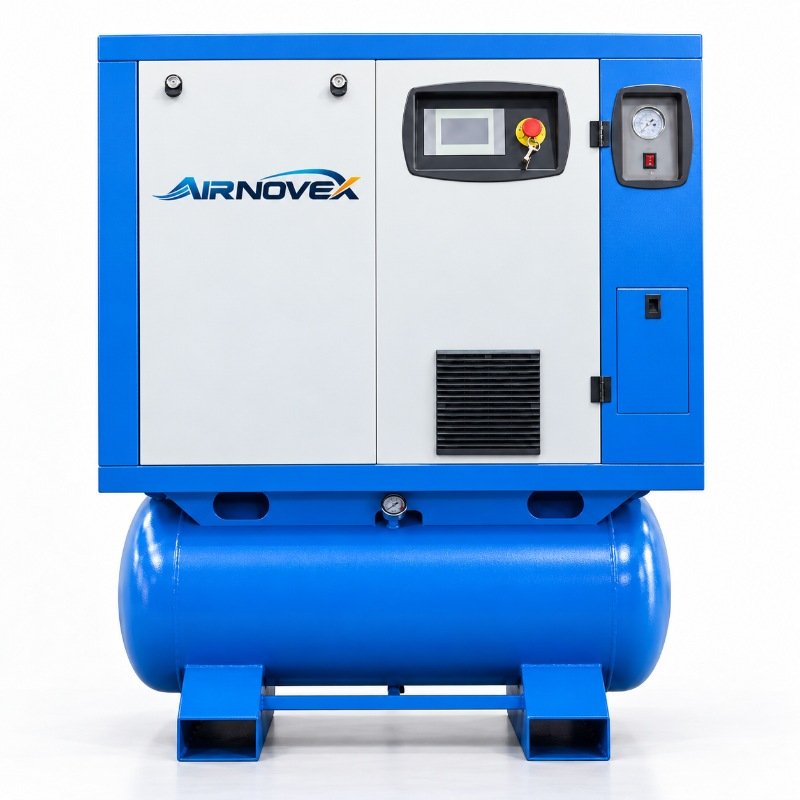
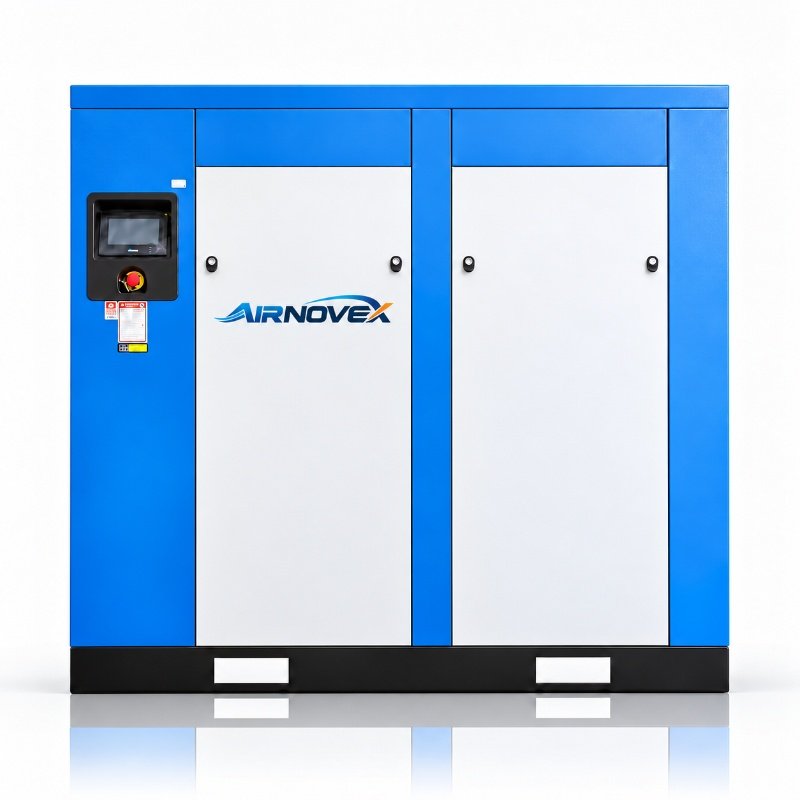
AIRNOVEX SMT selection starts with airflow, pressure, and operating hours. Evaluate the two-stage, oil-injected design in permanent-magnet VSD or fixed-speed form. Use the specifications above as the model reference.
How Two-Stage Compression Can Improve Operating Efficiency
Instead of producing the entire pressure rise in one screw element, two-stage compression divides the work between successive stages. Intermediate cooling can reduce the energy needed for further compression. The benefit is application-dependent: inlet conditions, final pressure, package design, and operating load all affect specific power.
Long production schedules
Input-power differences matter more across multiple shifts.
Pressure-specific performance
Evaluate delivered air at the actual required pressure, not just the nameplate motor rating.
Lower lifetime cost potential
Compare purchase cost against measured or documented energy consumption over expected operating hours.
Two-Stage VSD vs. Fixed Speed: Which Suits Your Load?
Drive selection is a separate decision from the number of compression stages. A permanent-magnet VSD configuration adjusts output within its approved operating range; a fixed-speed unit relies on its capacity-control strategy when demand falls.
| Operating condition | PM VSD configuration | Fixed-speed configuration |
|---|---|---|
| Changing air demand | Can follow load changes within the supported speed range. | Assess unloaded power, controls, and receiver capacity. |
| Steady base load | Compare full-load input power before selecting. | Often worth benchmarking for long, stable duty. |
| Multiple compressors | May serve as a trim unit if turndown and controls fit. | Can carry base load with coordinated sequencing. |
| Site conditions | Check inverter cooling and electrical power quality. | Check starting method and load/unload behavior. |
Neither option is automatically more economical at every load. For other system arrangements, see the AIRNOVEX variable-speed compressor range.
Industrial Applications Worth Evaluating
Central air stations
Shared compressed-air supply for several workshops or production lines with an identifiable daily demand profile.
Multi-shift manufacturing
Automotive components, metalworking, packaging, and general production with substantial annual operating hours.
OEM and plant expansion
New equipment or additional lines that require a documented pressure, flow, and air-quality specification.
This is an oil-injected compressor category. Select dryers and filtration around the process's air-quality requirement; do not assume oil-free delivery.
Size the Compressor by Usable Air, Not kW Alone
Establish demand
Record normal and peak free air delivery (FAD), in m³/min or CFM, ideally from plant measurements.
Define working pressure
Allow for pressure losses downstream. Compare flow at the correct 8, 10, or 12.5 bar reference point where applicable.
Map the load profile
Document shift hours, idle periods, simultaneous users, and any likely production expansion.
Confirm site constraints
Check three-phase voltage and frequency, ambient conditions, cooling, footprint, and outlet connection.
Higher discharge pressure can reduce available FAD for the same motor class. Oversizing can also cause inefficient operation at low demand. Model choice should follow the actual duty point and the proposed control method.
Compare Annual Energy Cost Before Comparing Prices
Request package input-power data at matched pressure and flow, including representative part-load conditions. Account for receiver storage, unloaded running, piping losses, dryers, filtration, and planned operating hours when comparing total cost of ownership.
Illustration only: a verified 10 kW difference sustained for 4,000 hours at $0.12/kWh would equal $4,800 per year. This is not an SMT performance claim or a guaranteed saving.
Installation and Maintenance Planning
Confirm how the compressor will fit the entire air station, not just the available floor space. Before purchase, review:
- Fresh-air intake and removal of cooling heat.
- Ambient temperature and service access.
- Electrical supply and appropriate protection.
- Receiver, dryer, filters, and condensate management.
- Pipe diameter, connection, and pressure drop.
- Access for oil, filter, and separator servicing.
Check model-specific cooling and installation instructions. Do not assume that motor ingress protection makes an entire package suitable for outdoor exposure.
Request an Application-Matched SMT Configuration
Tell AIRNOVEX how your plant uses compressed air. The information below helps narrow down motor size, pressure setting, drive selection, and supporting air treatment before a project quotation is prepared.
- Required air flow (m³/min or CFM)
- Working pressure (bar or psi)
- Operating hours and load variation
- Voltage and frequency
- Application and installation environment
If some values are not yet known, describe the equipment and current air supply in the online form.
Request a QuoteFrequently Asked Questions
What is the difference between a two-stage and a single-stage screw compressor?
A single-stage screw compressor raises inlet air to the required discharge pressure in one compression step. A two-stage design divides that pressure rise between two screw stages, with intermediate cooling helping to reduce compression work. This can improve efficiency at an appropriate duty point, but it adds system complexity. Compare actual package input power and delivered airflow at the same pressure rather than assuming either design is always better.
When is a two-stage rotary screw compressor worth considering?
Consider two-stage compression for plants with substantial, sustained compressed-air demand, multiple production shifts, or enough annual running hours for efficiency differences to matter financially. It is not automatically the best purchase for a lightly used workshop. The decision should reflect measured air consumption, required pressure, annual operating hours, energy prices, and the cost difference between suitable single-stage and two-stage packages.
Should I choose a two-stage VSD compressor or a fixed-speed version?
A VSD version is often useful when air demand changes significantly across shifts or production cycles because output can follow demand within the approved speed range. Fixed speed is worth comparing for relatively steady base-load operation. If the plant has several compressors, a VSD unit may serve as a trim machine. Verify minimum turndown, control compatibility, electrical conditions, and part-load performance before choosing.
How do I select the correct kW rating, airflow, and working pressure?
Start with the pressure needed at the point of use and add realistic losses through piping, dryers, and filters. Then establish normal and peak free air delivery (FAD), in m³/min or CFM, at the required compressor discharge pressure. The same motor power may deliver less air at a higher pressure. Use the model data above to shortlist candidates, then confirm the specified duty point and electrical supply before ordering.
How can I verify the energy savings of a two-stage compressor?
Request comparable package input-power and FAD data at the same pressure and reference conditions. For a variable-demand site, compare performance across the actual load profile, including unloaded time and operation below the VSD control range. Estimate annual electricity cost using average measured or modeled input kW, operating hours, and the local tariff. Savings percentages from a different installation are not a guaranteed result for your plant.
What installation, cooling, and maintenance details should I check?
Confirm adequate intake air, heat-exhaust ventilation, service clearance, and the site's maximum ambient temperature. Air-cooled configurations need a reliable path for discharge heat; any proposed water-cooled arrangement requires separate confirmation of cooling-water conditions. Check three-phase voltage and frequency, piping connections, condensate handling, and required air treatment. Plan access for lubricant, filter, and separator maintenance according to the approved equipment manual.
What should I send AIRNOVEX to receive a configuration and quotation?
Use the online inquiry form and provide required airflow, working pressure, daily or annual operating hours, voltage and frequency, and the application and installation environment. If available, include normal and peak demand, existing compressor details, required air quality, and installation country. AIRNOVEX can use these inputs to discuss a suitable size, VSD or fixed-speed selection, cooling arrangements, and associated air-treatment needs before preparing a project-specific quotation.