Keep Condensate Out of Your Compressed Air Network
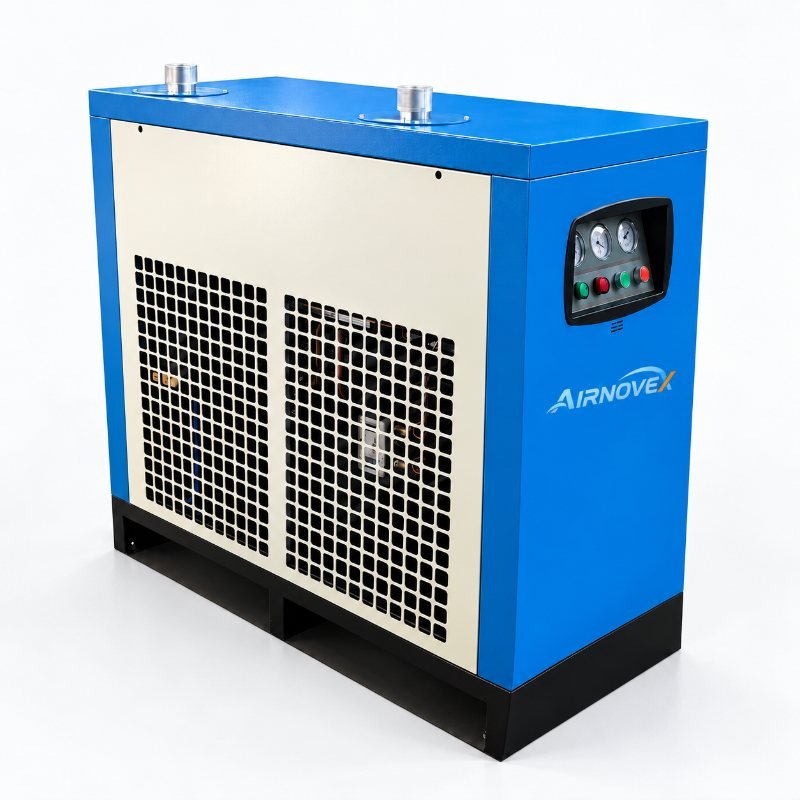
Water problems often appear far from the compressor: a valve begins to stick, a pneumatic tool discharges droplets, or moisture collects at the end of a distribution line. The AIRNOVEX SL Series refrigerated compressed air dryers are intended to lower the moisture load before these problems reach production equipment.
By cooling pressurized air and separating the water that condenses, a refrigerated dryer helps limit liquid water carried into an indoor plant-air system. That matters for routine automation, workshop equipment, packaging machinery and other processes where uncontrolled condensate interferes with operation.
How Refrigerated Drying Helps Control Water in Air Lines
The goal is to remove condensable moisture while the air is still in a controlled treatment stage, rather than letting it condense unpredictably in the factory piping.
Lower the air temperature
Compressed air gives up heat within the refrigerated drying process. As the temperature falls, part of its water vapor reaches the condensation point.
Remove liquid condensate
Condensed water is separated from the air stream and must be discharged through a properly functioning drainage arrangement.
Send treated air downstream
The air continues to the distribution system with a reduced moisture content, subject to the dryer capacity and the operating conditions.
Not sure whether refrigerated drying is sufficient?
Share the required pressure dew point and the conditions at your air users. AIRNOVEX can review whether the SL configuration is appropriate.
What the SL Series 80°C Inlet Limit Means for Your Installation
The listed SL-AB configurations have a maximum inlet air temperature of 80°C and a standard working pressure of 10 bar. This makes inlet temperature an important part of the selection conversation, particularly when the compressor discharge is relatively hot or upstream cooling is limited.
An 80°C maximum is an operating limit, not a promise that the published airflow is available at 80°C under every ambient condition. Hotter entering air carries a greater refrigeration and moisture-removal load. The usable dryer capacity and pressure dew point must be checked at the actual site conditions.
Confirm the temperature at the proposed dryer inlet during full-load operation, the maximum compressor-room temperature and any existing aftercooler or moisture separator. Do not assume that a high-temperature inlet rating removes the need for upstream cooling or condensate management in every installation.
Choose an SL Model by Air Demand, Then Verify Its Duty
The nine listed SL-AB models span 1.5 to 28.8 m³/min, approximately 53 to 1,017.1 CFM. Use the specifications above for exact model dimensions, weights and connection details; the groups below are a starting point for shortlisting, not corrected-capacity recommendations.
Compact air systems
SL-10AB, SL-20AB, SL-30AB
Consider these models for smaller compressors or dedicated equipment groups, provided the corrected flow and site conditions are within the selected rating.
Catalogue supply: 220 V. Listed connections: G 1 or G 1 1/2.
Shared plant-air demand
SL-50AB, SL-75AB, SL-100AB
For multiple production stations, account for peak compressor delivery and the expected inlet temperature before choosing from this group.
Catalogue supply: 220 V on SL-50AB and SL-75AB; 380 V on SL-100AB.
Higher-flow distribution
SL-150AB, SL-200AB, SL-250AB
For larger headers, check piping pressure loss, continuous airflow, drainage capacity and room ventilation alongside the dryer size.
Catalogue supply: 380 V. Listed air connection: DN80.
Catalogue voltage values do not establish phase, frequency or availability for every destination. Confirm the final electrical specification and operating basis in the quotation.
Where SL Refrigerated Air Dryers Can Add Practical Value
Refrigerated moisture removal is generally considered when a plant needs dependable everyday air treatment without the much lower pressure dew points required by some specialized processes. Suitability is always determined by the actual air-quality specification.
Pneumatic assembly and automation
Actuators, control valves and air-operated tools may be affected by liquid water in lines. Evaluate the downstream air requirement and the amount of air used when multiple stations operate together.
General workshops and maintenance bays
Compressed-air tools and workshop branches can experience condensation as hot air cools through piping. Check compressor cycling, receiver arrangement and whether the dryer sees full-load discharge temperatures.
Packaging and material handling
Air cylinders, sorting equipment and non-product-contact handling systems often benefit from controlled moisture. Product-contact or hygiene-critical uses require an additional air-quality and compliance review.
Machining and industrial utility networks
Central compressed-air headers may serve machines with different demands. Consider separate point-of-use treatment where a sensitive device requires cleaner or drier air than the general distribution system.
Six Checks Before You Match a Refrigerated Dryer to a Compressor
A nominal CFM match is not enough. Two installations using the same compressor airflow can need different dryer selections because operating temperatures, pressure and the required outlet air quality differ.
1. Compressor delivered airflow
Use the compressor's actual free air delivery at the intended operating pressure, not its motor horsepower. Identify sustained flow and realistic simultaneous demand.
2. Pressure at the dryer
Compare the proposed equipment with the SL Series 10 bar standard working pressure. Account for pressure losses across treatment equipment and the distribution network.
3. Highest inlet air temperature
Measure or establish the expected maximum after any upstream cooling. The 80°C inlet limit must not be confused with the conditions used to publish airflow ratings.
4. Ambient temperature and ventilation
Record the hottest room conditions, airflow around the dryer cabinet and access for service. Poor heat rejection can reduce the operating margin of refrigerated equipment.
5. Required pressure dew point
Define how dry the air must be where it is used. Obtain model-specific performance confirmation; a pressure dew point is not specified for these SL models in the available reference data.
6. Electrical and connection details
Confirm installation country, voltage, frequency, phase, piping size and available footprint. Use the listed model dimensions as planning references, then request final drawings.
Have compressor data but no dryer model?
Send the compressor datasheet or flow, pressure and temperature figures through the AIRNOVEX project form for a model review.
Plan the Dryer as Part of the Complete Air Treatment System
Dryer performance depends on what happens before and after the unit. The sequence below illustrates common system functions; final component order and treatment stages depend on the compressor, receiver arrangement and filtration specification.
- CompressorGenerates air at the required delivery and pressure.
- Cooling and separationManages heat and bulk condensate where required.
- ReceiverProvides storage and helps manage demand fluctuations.
- SL dryerReduces condensable moisture through refrigeration.
- Filtration and usersControls specified contaminants before air reaches equipment.
Drainage and condensate disposal
Plan a suitable drain path, check that condensate is removed reliably and apply appropriate oil-water treatment where required. A blocked drain can undermine an otherwise correctly sized dryer.
Access for servicing
Allow room for air movement, cleaning and maintenance according to the supplied installation instructions. Check the final cabinet dimensions, service clearances and connection orientation.
For other system components, review the AIRNOVEX air treatment range. Applications requiring substantially lower dew points should be assessed for desiccant drying rather than assuming a refrigerated dryer is interchangeable.
Request an SL Series Quote With the Right Operating Details
An accurate industrial air dryer quotation should identify more than the cabinet size. AIRNOVEX can use your project information to discuss model suitability and the configuration that needs to be confirmed before purchase.
Share your operating requirements
- Preferred SL model, if known
- Compressor delivered flow in CFM or m³/min
- Normal and maximum working pressure
- Maximum dryer inlet and ambient temperatures
- Required pressure dew point or air-quality target
Include project and purchase details
- Installation country and electrical supply
- Air connection and installation constraints
- Quantity and intended application
- Relevant compressor data or system notes
- Any requested documentation or configuration details
Use the AIRNOVEX website enquiry form. Final capacity, dew point, electrical configuration and commercial terms must be confirmed in the issued quotation.
SL Series Questions From Industrial Buyers
Can an SL Series dryer accept compressed air at 80°C?
The listed SL-AB models specify a maximum inlet temperature of 80°C. This is a temperature limit, not a guarantee of full catalogue airflow at that temperature. Available drying capacity also depends on operating pressure, ambient temperature and the required pressure dew point. Ask for confirmation against your actual compressor discharge conditions.
Which SL model should I consider for a 100 CFM compressor?
The SL-20AB is listed at 98.9 CFM and the SL-30AB at 134.2 CFM under catalogue rating conditions. A nominal 100 CFM demand should not automatically be assigned to either model. Compare the compressor's actual delivered flow with the dryer's corrected capacity at your inlet temperature, pressure and ambient conditions before selecting.
What pressure dew point does the SL Series provide?
A model-specific guaranteed pressure dew point is not stated in the available SL-AB reference specifications. Refrigerated dryers are commonly used for general industrial moisture control, but required outlet conditions must be established for each project. State your target pressure dew point and operating conditions so the proposed configuration can be checked before purchase.
Are the SL dryers available for 50 Hz and 60 Hz power systems?
The reference model list shows catalogue voltages of 220 V or 380 V depending on model, but it does not establish the phase or frequency for each configuration. Provide the destination country and the site's available voltage, phase and frequency. The exact electrical supply and availability should be confirmed in the final quotation.
Will an SL refrigerated dryer also remove oil and fine particles?
A refrigerated dryer primarily reduces moisture by cooling the compressed air and separating liquid condensate. It should not be treated as a substitute for oil-coalescing or particulate filters. If the application specifies oil or particle limits, choose suitable filtration stages and establish the air-quality target at the point of use.
How much does an AIRNOVEX SL refrigerated air dryer cost?
Pricing depends on the selected model, electrical configuration, quantity, destination and any agreed air-treatment or project requirements. A meaningful comparison should also check the rated operating conditions, included components and the technical documentation supplied. Submit your preferred model and installation requirements through the AIRNOVEX contact form to request a quotation.
Can an SL refrigerated dryer replace a desiccant air dryer?
Not in every application. Refrigerated drying is often appropriate for general indoor plant air, while a desiccant dryer may be necessary where piping is exposed to freezing temperatures or a substantially lower pressure dew point is specified. Compare the required moisture level, climate and downstream process risks before selecting the drying technology.
What details should I send for a model recommendation?
Provide compressor delivered airflow, normal operating pressure, peak inlet temperature, ambient temperature, required pressure dew point, electrical supply, destination country and intended use. Include quantity and any existing SL model preference. These details allow the supplier to review corrected capacity, connection compatibility and the scope of a project quotation.