Choosing between a fixed speed and variable speed rotary screw air compressor comes down to one question: how much does your compressed air demand change during normal operation? A fixed-speed compressor is often the more economical choice when airflow demand remains steady and the machine operates near full capacity. A variable-speed compressor usually has an advantage when demand fluctuates because it can adjust motor speed instead of repeatedly loading and unloading.
For this comparison, I'm prioritizing actual energy consumption, pressure stability, equipment cost, maintenance requirements, and long-term operating economics rather than advertised efficiency claims. The lowest purchase price does not always produce the lowest operating cost, and a variable frequency drive does not automatically guarantee energy savings. The right decision depends on the compressor's load profile, control strategy, operating pressure, and the performance of the entire compressed air system.
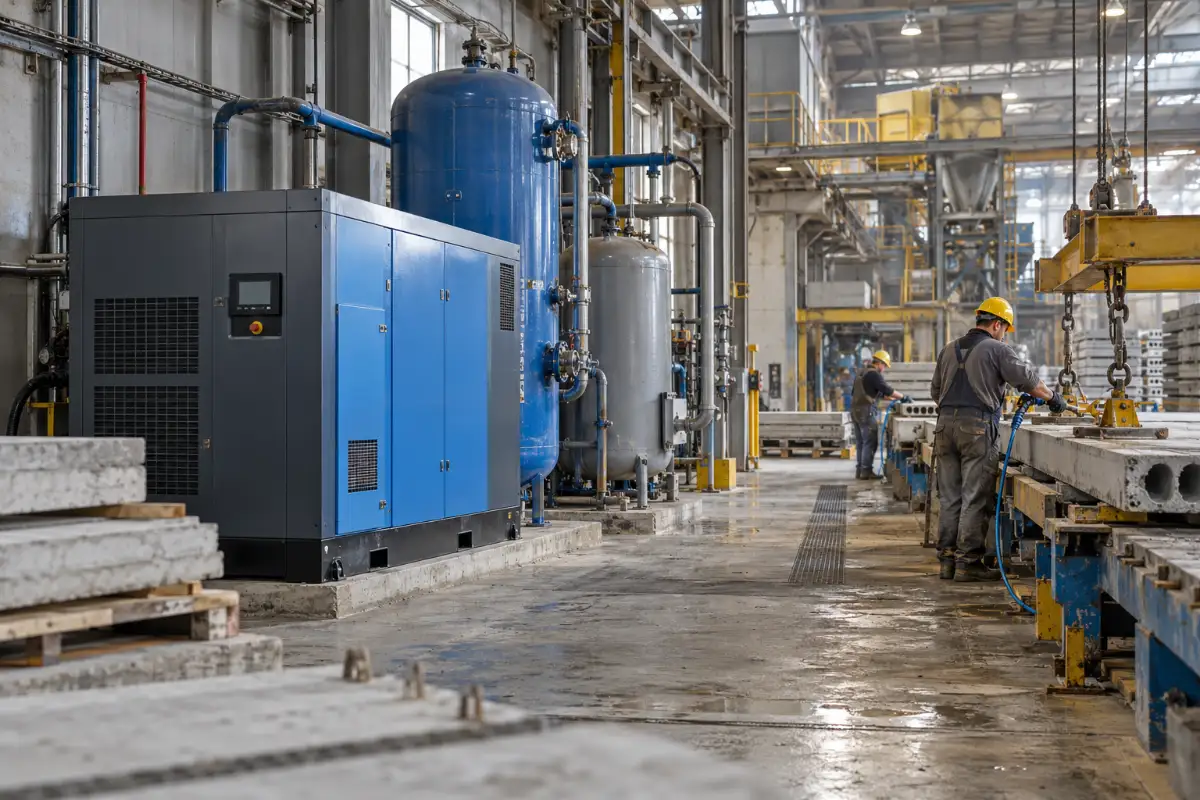
Fixed Speed vs Variable Speed Air Compressor: Quick Comparison
Both compressor types use rotating screw elements to compress air. Their main difference is how they respond when the facility requires less airflow than the compressor can produce at full capacity.
A fixed-speed machine normally maintains its operating speed while loaded. Depending on its control system, it may unload, stop, or use another capacity-control method when demand falls. A variable-speed drive (VSD) compressor adjusts motor speed within an approved operating range to change its delivered airflow.
The distinction affects electricity consumption most strongly during part-load operation. It also influences pressure control, equipment complexity, maintenance planning, and the amount of air storage required.
| Selection Factor | Fixed-Speed Screw Compressor | Variable-Speed Screw Compressor |
|---|---|---|
| Motor operation | Runs at a fixed operating speed while loaded | Adjusts motor speed within the permitted range |
| Capacity control | Typically load/unload, start/stop, or inlet modulation | Speed modulation, with unloading or stopping below minimum capacity |
| Best load profile | Relatively constant demand near rated capacity | Demand that changes substantially during operating hours |
| Full-load efficiency | Can be advantageous when correctly sized | May incur additional drive-related losses |
| Part-load efficiency | Depends heavily on control method and air storage | Often advantageous within its efficient speed range |
| Pressure regulation | Usually operates within a defined control band | Can maintain a narrower pressure band within its control range |
| Initial investment | Generally lower for comparable equipment | Generally higher due to drive and control components |
| Electrical complexity | Relatively straightforward | Requires additional attention to drive cooling, power quality, and electrical compatibility |
| Maintenance considerations | Mechanical components, lubrication, controls, and starting equipment | Similar mechanical maintenance plus VSD electronics and associated cooling |
| Typical system role | Base-load compressor | Trim compressor or standalone variable-demand machine |
My initial recommendation: If a facility needs approximately the same airflow throughout its operating schedule, I would compare fixed-speed machines first. If airflow changes considerably between production stages, a properly sized VSD machine deserves a detailed energy analysis. For larger installations, the strongest solution may be a combination of both technologies.
How a Fixed-Speed Rotary Screw Air Compressor Works
A fixed-speed rotary screw compressor uses an electric motor to drive two intermeshing screw rotors. As the rotors turn, air enters the compression chamber, becomes trapped between the rotor profiles and housing, and moves toward the discharge end as the available volume decreases.
The compressor delivers air into the distribution system through the applicable discharge, cooling, separation, and treatment components.
In a typical oil-injected design, lubricant helps seal internal clearances, remove compression heat, and lubricate relevant components. An air-oil separation system then removes most of the circulating lubricant from the discharged air.
The important operating characteristic is that the main motor does not continuously change speed to follow air demand. Instead, the compressor's control system manages capacity through the control method installed on the machine.
What Happens When Air Demand Falls?
Consider a fixed-speed compressor capable of delivering 300 CFM at a specified discharge pressure. If the production equipment requires approximately 300 CFM continuously, the compressor can operate near its intended full-load point.
Now suppose the facility temporarily requires only 150 CFM.
The compressor must respond because continuing to deliver 300 CFM into a closed system would increase pressure beyond the intended operating range.
A load/unload-controlled machine may close its inlet valve, stop delivering useful compressed air, and continue running unloaded until system pressure falls enough to reload. Some installations stop the motor after an unloading period, subject to the manufacturer's operating limits.
During unloaded operation, the compressor may continue consuming substantial electrical power even though its useful air delivery has fallen to zero.
That distinction is central to fixed-speed operating economics. The machine is not necessarily wasting energy because its motor speed is constant. Energy is lost when the control strategy does not efficiently match production to demand.
Why Fixed Speed Still Makes Engineering Sense
Fixed-speed machines remain a practical industrial choice because a stable airflow requirement reduces the need for sophisticated capacity adjustment.
If a production line consistently requires 280 CFM and a compressor delivers approximately 300 CFM at the required pressure, the machine can operate for long periods under favorable loading conditions.
A properly selected fixed-speed package can offer straightforward controls, familiar service requirements, and a lower equipment investment. The relative simplicity is especially valuable where maintenance personnel already understand conventional rotary screw compressors.
For buyers comparing standard industrial configurations, the AIRNOVEX fixed-speed screw compressor range provides a starting point for reviewing available power classes, operating pressures, and equipment arrangements.
I would still verify the exact full-load package input power and delivered airflow before comparing models. A favorable motor rating does not establish favorable energy consumption by itself.
How a Variable-Speed Rotary Screw Air Compressor Works
A variable-speed compressor performs the same fundamental compression process but adds electronic motor-speed control.
The variable frequency drive adjusts the electrical frequency and voltage supplied to a compatible motor according to its control strategy. This changes motor speed and, within the compressor's approved operating range, changes the amount of air delivered.
A pressure sensor provides feedback to the controller. When demand increases and pressure begins to fall, the controller can increase motor speed. When demand decreases, the controller can reduce motor speed rather than immediately switching the compressor into an unloaded state.
This allows compressor capacity to follow changing production requirements more closely.
Why Speed Control Can Reduce Power Consumption
For a positive-displacement screw compressor, delivered airflow is closely related to rotor speed, although internal leakage, operating pressure, and air-end efficiency affect the exact relationship.
Reducing speed generally reduces airflow and the power required to compress it. A properly designed VSD package can therefore avoid some of the unloaded running associated with conventional fixed-speed controls.
However, compressor power does not decrease according to the cube-law relationship commonly associated with certain centrifugal fans and pumps.
Rotary screw compressors have different compression characteristics. Internal leakage, pressure ratio, motor efficiency, drive losses, and minimum operating speed all influence part-load performance.
I would not accept a projected energy-saving percentage based only on the statement that the compressor uses a variable frequency drive.
The correct comparison is the total package electrical input required to produce the specified airflow at the required operating pressure.
What Is a VSD Compressor's Turndown Range?
Turndown describes the extent to which compressor output can be reduced while the machine remains within its permitted operating range.
For example, a machine rated at 300 CFM with a verified minimum continuous output of 90 CFM has a nominal airflow turndown ratio of approximately 3.3:1 at those conditions.
That ratio is only meaningful if the compressor can sustain the stated pressure, cooling, lubrication, and mechanical operating requirements throughout the range.
Not every VSD compressor can operate continuously at extremely low speed. Manufacturers establish minimum operating limits to protect the air end, maintain lubrication, control internal temperatures, and preserve acceptable performance.
Below the minimum stable output, a VSD compressor may unload or stop. It can then behave more like a cycling machine, with efficiency increasingly dependent on storage volume and the selected control settings.
This is why maximum turndown should never be treated as a substitute for reviewing the actual part-load power curve.
Permanent Magnet VSD vs Conventional Motor VSD
Variable-speed compressors may use different motor technologies, including permanent magnet motors and conventional induction motors designed for inverter operation.
Permanent magnet designs can offer favorable motor efficiency and compact arrangements in suitable applications. However, the package's overall performance still depends on motor design, air-end characteristics, cooling, speed range, and control integration.
A permanent magnet label is not sufficient evidence that one compressor will consume less electricity than another.
I would compare complete package performance rather than treating motor technology as the deciding specification.
The AIRNOVEX variable-speed screw compressor product information includes conventional VSD, permanent magnet, and related industrial configurations for buyers evaluating different airflow and pressure requirements.
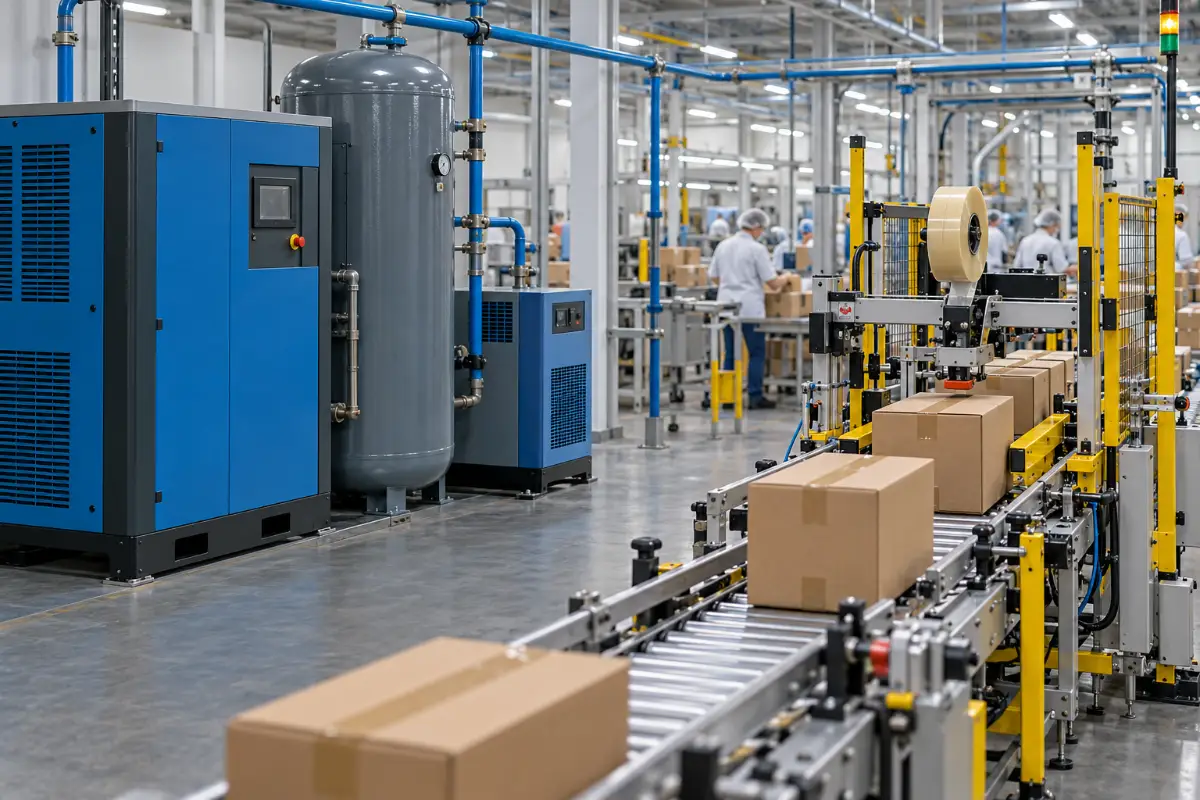
Which Compressor Uses Less Electricity?
The answer depends on how much compressed air the facility needs at each point in its operating schedule.
A fixed-speed compressor operating efficiently at full load can perform very well. The same compressor may consume disproportionately more energy when required airflow falls and the machine spends significant time unloaded.
A VSD compressor often performs better over a variable demand profile, particularly when operating for substantial periods within its efficient modulation range.
But the comparison changes at the extremes.
At Full Load, Fixed Speed May Have the Advantage
At or near maximum output, a well-designed fixed-speed compressor avoids certain power conversion losses associated with a variable frequency drive.
A VSD package may therefore consume slightly more electrical power than a comparable fixed-speed package when both are delivering similar airflow at the same pressure.
This is not a universal ranking of compressor models. Different air ends, motor efficiencies, cooling arrangements, and operating pressures can outweigh the difference between drive technologies.
The Department of Energy's 2016 Improving Compressed Air System Performance sourcebook specifically discusses additional drive losses at high VSD output and reduced efficiency at very low speeds. It also identifies the importance of operating within the machine's favorable speed range.
For a facility operating close to rated capacity throughout most of the year, that distinction deserves attention.
At Partial Load, Variable Speed Often Has the Advantage
Part-load operation is where VSD technology can justify its additional investment.
Suppose two compressors have similar full-load electrical demand and delivered airflow. One uses conventional load/unload control; the other adjusts motor speed.
When the facility requires less air, the fixed-speed machine may alternate between producing full airflow and delivering no useful airflow while still drawing power.
The VSD machine can reduce speed and continue supplying compressed air, provided demand remains within its effective control range.
That difference can translate into lower average electrical demand during variable production.
The benefit becomes financially significant when the part-load operating hours are substantial. Short periods of low consumption provide less opportunity to recover the higher purchase price.
At Very Low Load, Neither Design Is Automatically Efficient
A compressor sized for a large production line may be a poor match for a small overnight utility load.
If the required flow falls below the minimum output of a VSD machine, the compressor may need to unload, stop, or cycle. If the installed fixed-speed machine is similarly oversized, it may also operate inefficiently.
Under these conditions, a smaller dedicated compressor, improved sequencing, or better isolation of nonessential air users may be more economical than relying on either large machine.
For this comparison, I would rank the match between compressor capacity and actual demand above the presence of a VSD.
Why Load/Unload Control Changes the Comparison
The phrase "fixed-speed compressor" does not describe a single energy-performance curve. Two machines with similar motor ratings can behave differently because their controls are configured differently.
Load/unload, start/stop, inlet modulation, and variable displacement all influence the electricity required at partial capacity.
| Control Method | Response to Lower Demand | Main Energy Consideration | What Buyers Should Verify |
|---|---|---|---|
| Load/unload | Alternates between delivering full airflow and delivering little or no useful airflow | Unloaded power and time spent unloaded | Unloaded kW, receiver capacity, and cycling frequency |
| Start/stop | Stops the motor when sufficient stored air is available | Starting limitations and required storage | Permitted starts per hour and stopping logic |
| Inlet modulation | Restricts incoming air while the compressor continues running | Power can remain relatively high as airflow decreases | Measured part-load power curve |
| Variable displacement | Changes effective compression capacity using internal control mechanisms | Efficiency depends on the specific design and control range | Package power at multiple load points |
| Variable speed | Changes motor speed to alter delivered airflow | Drive losses, minimum speed, and off-design efficiency | Full-load and part-load package input power |
A fixed-speed compressor with effective load/unload control and adequate storage can be substantially more economical than a poorly controlled modulation-only installation.
Conversely, replacing a modulation-controlled machine with a VSD compressor may produce significant savings because the baseline control method is relatively inefficient.
These are different comparisons. A claimed energy reduction against inlet modulation should not be assumed to apply when replacing an efficient load/unload machine with well-designed storage.
The Department of Energy's compressed-air evaluation methodology distinguishes baseline compressor controls when calculating savings. That methodological distinction is essential to obtaining a credible financial projection.
The Importance of the Actual Air Demand Profile
A compressor's rated capacity tells me what the machine can supply. It does not tell me what a facility consumes.
To select between fixed and variable speed, the most useful information is a time-based record of airflow demand.
A production schedule can provide preliminary guidance, but machine operating hours are not the same as compressor loading hours.
A plant running around the clock may have continuous baseline demand mixed with large intermittent peaks. Another plant may operate only one shift but consume nearly identical airflow from the beginning to the end of production.
Those two systems could justify very different compressor configurations.
Record Demand Over Representative Operating Periods
I would recommend collecting data that covers normal production, startup, shutdown, changeovers, breaks, reduced-capacity operation, and any scheduled cleaning or maintenance activities that use compressed air.
At a minimum, the assessment should include:
-
Airflow: Actual compressed air consumption over time, using a properly specified and installed flowmeter.
-
Electrical power: True compressor package input kW, rather than motor current alone.
-
System pressure: Pressure at the compressor and critical downstream points.
-
Operating status: Loaded, unloaded, stopped, and variable-speed operating states.
-
Production schedule: The activities responsible for major changes in air consumption.
-
Air treatment: Dryer operation, filter pressure drop, and condensate drain behavior.
A single average airflow reading is not enough. Two facilities can have identical average consumption and completely different peak demands.
For example, a steady 200 CFM load is not equivalent to a process alternating between 100 and 300 CFM, even though both can average 200 CFM over equal periods.
The second process may need more responsive controls, additional storage, or both.
How Long Should the System Be Monitored?
Monitoring should cover the complete pattern of meaningful operating conditions rather than an arbitrary number of calendar days.
For a consistent production cycle, a representative full operating week may provide useful initial information. Facilities with batch production, seasonal processes, or irregular shift patterns may require longer monitoring or several separate data collection periods.
I would also compare the logged period against production records. A compressor assessment made during an unusually quiet week should not become the basis for a permanent equipment purchase without adjustment.
Where uncertainty remains, use clearly defined low, normal, and peak demand scenarios instead of pretending that one average value describes the entire operation.
Pressure Stability: What Variable Speed Really Improves
Pressure control is another reason facilities consider VSD compressors.
A fixed-speed load/unload compressor generally operates between selected loading and unloading pressure limits. As demand changes, system pressure rises or falls within that control band.
A variable-speed machine can respond more continuously by adjusting output to maintain a pressure setpoint while operating within its modulation range.
The 2016 Department of Energy sourcebook notes that some VSD compressor systems can maintain discharge pressure within approximately 1–2 psi across a broad operating range. This is a published technical observation, not a guarantee for every compressor or installation.
A narrow compressor discharge pressure band may be useful for pneumatic equipment requiring reasonably consistent supply pressure.
However, a stable discharge pressure does not automatically mean stable pressure at the point of use.
Distribution Problems Can Defeat Good Compressor Controls
Consider a facility where the compressor maintains 110 psig, but a distant production machine experiences pressure losses through restrictive piping, undersized hoses, dirty filters, or a heavily loaded dryer.
Changing the compressor to VSD control cannot eliminate these physical restrictions.
Increasing discharge pressure to compensate may raise energy consumption and create additional demand from unregulated air users.
I would investigate pressure loss across the system before paying a premium for tighter compressor control.
Useful pressure measurements include the compressor discharge, receiver outlet, dryer inlet and outlet, main distribution header, and the most demanding production equipment.
Pressure should be checked while the system is experiencing its actual peak airflow requirement. Measurements taken during idle operation may conceal significant restrictions.
Lower Pressure Can Be More Valuable Than a New Drive
A reduction in unnecessary system pressure can decrease compressor energy requirements and may also reduce air consumption from unregulated users and leaks.
The exact reduction depends on system configuration, controls, pressure ratio, and how end-use equipment responds.
I would not apply a universal percentage saving for every pressure reduction. Instead, I would model the proposed operating pressure and confirm that all critical equipment remains within its required pressure range.
If the current compressor operates at unnecessarily high pressure, correcting that condition may be an attractive improvement regardless of whether the replacement machine is fixed speed or variable speed.
Air Receiver Sizing Can Change the Economics
An air receiver is more than a reserve tank. It provides usable compressed air storage, helps buffer intermittent demand, and influences compressor control behavior.
For fixed-speed load/unload machines, adequate storage can extend the time between loading and unloading events. With suitable control settings, it may also allow the compressor to stop rather than continue running unloaded.
For VSD machines, storage helps absorb demand changes that occur faster than the compressor can respond and can reduce unnecessary speed fluctuations.
Neither technology eliminates the need to consider receiver capacity.
Storage Depends on Usable Pressure Difference
The useful amount of stored air depends on the receiver's internal volume and the pressure difference between the available storage pressure and the lowest acceptable system pressure.
A large receiver operating across an extremely narrow pressure band may provide less usable air than expected.
For preliminary calculations using free-air flow referenced to the same inlet conditions, an approximate receiver-sizing relationship is:
Required receiver volume = (Additional free-air demand × Duration × Reference absolute pressure) ÷ Available absolute pressure difference
The units must be consistent. The estimated volume must then be checked against compressor response, pipe volume, pressure losses, thermal conditions, and the actual operating strategy.
This relationship is useful for short-duration demand events, not as a complete receiver design method.
For practical configuration considerations, AIRNOVEX provides additional information about industrial air receiver tanks, storage arrangements, and preliminary sizing.
Storage Is Not a Substitute for Continuous Capacity
An air receiver can help a 300 CFM compressor handle a short event requiring more than 300 CFM, provided enough usable air has been stored.
It cannot sustain a continuous 400 CFM demand indefinitely.
Once stored pressure decreases to the minimum acceptable level, the compressor must provide the ongoing airflow requirement.
I would therefore size the compressor around realistic sustained demand and use storage to address appropriate short-duration peaks.
Oversizing the compressor to cover every brief demand spike can create unnecessary investment and poor part-load operation during the remaining hours.
One Fixed-Speed Compressor Plus One VSD: Often the Strongest Arrangement
The comparison becomes more interesting when a facility requires multiple compressors.
For a larger system with reasonably stable baseline demand and additional variable demand, I would evaluate a base-load and trim arrangement before specifying several machines that all operate independently.
The operating principle is straightforward: one or more fixed-speed compressors supply the relatively constant portion of the demand, while a variable-speed compressor adjusts its output to cover the changing balance.
How Base-Load and Trim Control Works
Assume a production facility regularly requires 500 CFM of baseline airflow, with an additional variable demand ranging from 100 to 300 CFM.
A possible system concept would use a fixed-speed machine supplying approximately 500 CFM and a VSD machine handling the remaining variable demand.
During normal production, the fixed-speed compressor operates near its efficient full-load point. The VSD machine increases or decreases output as equipment starts and stops.
This configuration can avoid operating two large fixed-speed compressors partially loaded while also avoiding the need for one oversized VSD compressor to handle the entire demand.
The example describes an arrangement, not a completed equipment specification. The actual trim compressor must have a suitable minimum and maximum capacity, adequate pressure capability, and controls that work correctly with the base compressor.
Watch for a Control Gap
A control gap occurs when the available compressor combinations cannot smoothly cover a particular range of demand.
Suppose a fixed-speed base compressor delivers 500 CFM and a VSD trim compressor cannot operate continuously below 150 CFM.
With both machines running, the minimum combined continuous delivery may be approximately 650 CFM.
If demand falls to 600 CFM, the controller may need to unload or stop the fixed-speed machine. Depending on the VSD compressor's maximum capacity, that transition may cause additional cycling or pressure instability.
The solution is not necessarily a larger VSD machine. It may involve a different capacity combination, a suitable sequence controller, revised operating bands, or additional storage.
The important point is that compressor selection and sequencing must be evaluated together.
Why Multiple VSD Compressors Are Not Always Necessary
Installing VSD technology on every compressor may increase equipment investment without producing corresponding energy savings.
If several compressors are required to provide a stable baseline load, operating suitable fixed-speed machines near full capacity may be more economical.
One properly sized VSD unit can then provide the capacity adjustment needed to maintain system pressure.
This configuration is consistent with the base-load and trim principles discussed in the Department of Energy's compressed-air system guidance.
Redundancy must still be considered separately. A compressor arrangement that minimizes electricity cost is not necessarily adequate if the failure of one machine would stop a critical production process.
Which Design Fits Different Industrial Applications?
Industry labels alone do not determine the right compressor. A packaging operation can have stable or highly variable airflow depending on equipment utilization. The same applies to fabrication, assembly, textile processes, and general plant utilities.
I would make the initial selection using the actual demand behavior rather than the industry name.
| Operating Scenario | Configuration Worth Evaluating First | Reason | Critical Check |
|---|---|---|---|
| Continuous process with stable airflow | Fixed speed | Long periods near rated output can favor efficient full-load operation | Measured full-load package kW and airflow |
| Production lines starting independently | VSD | Flow requirements change as equipment starts and stops | Minimum and maximum continuous capacity |
| Large facility with stable baseline and variable peaks | Fixed-speed base load plus VSD trim | Separates steady demand from variable demand | Compressor sequencing and control gaps |
| Short, high-flow pneumatic events | Compressor with correctly sized local or central storage | Receiver storage may handle short peaks economically | Peak duration and usable storage pressure |
| Long idle periods with limited essential airflow | Smaller dedicated machine or staged system | Large machines may operate inefficiently at low demand | Off-shift load and shutdown requirements |
| Critical production requiring uninterrupted air | Redundant multi-compressor system | Availability and fault tolerance may outweigh small efficiency differences | Required standby capacity and failure response |
The table is a screening tool, not a substitute for equipment sizing. Air quality, required discharge pressure, operating environment, and future expansion can change the final recommendation.
Initial Purchase Price vs Total Cost of Ownership
Equipment price matters, but it should not be evaluated independently of electricity use.
A fixed-speed compressor commonly has a lower initial price than a comparably configured VSD machine. The difference reflects the drive system, electrical components, control integration, and sometimes the motor technology.
The exact price premium varies with compressor capacity, manufacturer, air-end design, controls, electrical specifications, and included accessories.
Published percentages for typical VSD price premiums are not sufficiently reliable for a project-specific decision. I would obtain comparable quotations instead of applying an assumed market markup.
The commercial comparison should include:
-
Compressor purchase price and included equipment
-
Electrical installation and distribution requirements
-
Air receiver, dryer, filtration, and piping costs
-
Annual package electricity consumption
-
Scheduled maintenance and consumables
-
Drive, motor, and control repair provisions
-
Expected operating life and replacement planning
-
Downtime exposure and backup capacity
-
Any applicable demand charges or other electricity billing components
Annual electricity costs can be estimated from actual or modeled electrical input power:
Annual energy use (kWh) = Average electrical input power (kW) × Annual operating hours
Annual energy cost = Annual energy use (kWh) × Electricity rate per kWh
These formulas are simple, but the accuracy of the result depends on the average power assumption.
Using motor nameplate power as though it were measured package input can produce a misleading estimate. The motor rating is not necessarily the actual power drawn from the electrical supply.
Worked Example: Comparing Annual Electricity Costs
A numerical example is more useful than a generic claim that variable-speed compressors always save a fixed percentage of energy.
The following calculation uses hypothetical electrical input values to demonstrate the evaluation method. The figures are illustrative assumptions, not laboratory measurements, published AIRNOVEX performance data, or results from an actual installation.
Illustrative Operating Conditions
-
Compressor class: Approximately 75 kW nominal motor rating
-
Annual operating time: 6,000 hours
-
Electricity rate: $0.14/kWh
-
Required pressure: Same pressure for both alternatives
-
Delivered airflow: Both alternatives are assumed capable of meeting the required load
-
Operating conditions: Identical inlet and installation conditions
-
Cost boundary: Compressor package electricity only; downstream equipment is excluded
The operating year is divided into three demand periods rather than applying one average load percentage.
| Demand Level | Annual Hours | Assumed Fixed-Speed Average Input | Assumed VSD Average Input | Fixed-Speed Energy | VSD Energy |
|---|---|---|---|---|---|
| 90% of rated flow | 2,000 | 80 kW | 83 kW | 160,000 kWh | 166,000 kWh |
| 65% of rated flow | 2,500 | 68 kW | 59 kW | 170,000 kWh | 147,500 kWh |
| 35% of rated flow | 1,500 | 43 kW | 38 kW | 64,500 kWh | 57,000 kWh |
| Total | 6,000 | — | — | 394,500 kWh | 370,500 kWh |
The modeled VSD machine uses slightly more power during the highest-load period but less power during the two lower-demand periods.
Across the full operating schedule, the results are:
| Financial Metric | Fixed Speed | Variable Speed |
|---|---|---|
| Annual compressor electricity use | 394,500 kWh | 370,500 kWh |
| Annual cost at $0.14/kWh | $55,230 | $51,870 |
| Illustrative annual energy difference | 24,000 kWh | |
| Illustrative annual cost difference | $3,360 | |
| Calculated energy reduction | Approximately 6.1% | |
This is a deliberately moderate example. It demonstrates why the percentage saving depends on the load distribution and the relative performance curves of the machines being compared.
It would be incorrect to treat the calculated 6.1% as a general VSD energy-saving claim.
Actual models may produce a larger benefit, a smaller benefit, or no benefit at all under different operating conditions.
What Would the Payback Period Be?
Assume the installed VSD alternative costs $11,000 more than the comparable fixed-speed solution. This price difference is another hypothetical input rather than a quoted equipment premium.
Simple payback = Additional installed investment ÷ Annual operating savings
$11,000 ÷ $3,360 = Approximately 3.3 years
This calculation excludes financing, maintenance differences, taxes, electricity price changes, residual value, and any potential electrical demand charges.
It is a preliminary screening calculation, not a discounted cash-flow analysis.
If the actual part-load power curves or annual operating hours change, the payback period must be recalculated.
How Electricity Prices Affect VSD Payback
Electricity price can make the same compressor upgrade financially attractive in one facility and difficult to justify in another.
Using the illustrative annual energy difference of 24,000 kWh and the same assumed $11,000 additional investment:
| Electricity Rate | Annual Energy Savings | Annual Cost Savings | Simple Payback |
|---|---|---|---|
| $0.09/kWh | 24,000 kWh | $2,160 | 5.1 years |
| $0.14/kWh | 24,000 kWh | $3,360 | 3.3 years |
| $0.20/kWh | 24,000 kWh | $4,800 | 2.3 years |
| $0.25/kWh | 24,000 kWh | $6,000 | 1.8 years |
All values in this table are mathematical scenarios based on the same hypothetical operating model, not quoted electricity tariffs or documented customer results.
The economic sensitivity is clear: higher electricity prices increase the financial value of verified energy savings.
Operating hours produce a similar effect. A machine running only occasionally has fewer opportunities to recover an investment in speed control.
For a continuously used compressor, even a relatively modest improvement in average power consumption may become important over several years.
I would evaluate the full expected ownership period rather than reject or approve a VSD compressor based on first-year savings alone.
A Documented Compressed Air Project: What the Results Actually Show
Published facility improvement projects can provide useful context, provided the results are not attributed to a single technology when several changes were implemented.
A 2023 case study published through the Department of Energy's Better Buildings & Better Plants Initiative describes improvements carried out by Plastics Engineering Company (PLENCO).
The project combined compressed air demand reduction, isolation valves, compressor capacity adjustments, and improved use of an existing VSD compressor.
During one project phase, the company replaced a larger, modulation-controlled compressor with a smaller fixed-speed machine that could operate as the base-load unit while the existing VSD compressor handled changing demand.
The reported figures for that phase were:
-
Purchase and installation cost: $43,100
-
Reported annual electricity savings: 243,000 kWh
-
Reported annual electricity cost savings: $20,900
-
Reported simple payback: 1.5 years, including the stated incentive
These are documented project figures, not AIRNOVEX customer results. The case study also describes additional improvements and savings from other project phases. [3]
The lesson I take from this project is not that every fixed-speed and VSD combination will produce similar savings. The stronger point is that compressor sizing, demand isolation, and coordinated controls can matter more than replacing equipment with the most expensive available technology.
PLENCO's results should not be used as an expected savings percentage or payback guarantee for an unrelated installation.
How to Compare Compressor Efficiency Correctly
Motor horsepower is useful for identifying approximate equipment size, but it is a weak metric for comparing operating efficiency.
Two compressors with identical nominal motor ratings can deliver different airflow at the same pressure. Their total electrical input can also differ.
I would compare compressors using actual delivered airflow and total package power at the same operating conditions.
Free Air Delivery Matters More Than Motor Size
Free air delivery (FAD) describes the compressor's delivered airflow referenced to specified inlet conditions under the applicable test method.
Technical data may express capacity in CFM, ACFM, SCFM, or cubic meters per minute.
These values should not be treated as interchangeable unless their reference conditions and measurement definitions are consistent.
A compressor advertised at 300 CFM under one reference condition may not be directly comparable to another machine advertised at 300 SCFM under a different reference condition.
Ask the supplier to identify the flow definition, rated pressure, inlet reference conditions, and applicable testing method.
Use Specific Package Power
Specific package power relates electrical power consumption to delivered airflow.
One common reporting format is:
Specific package power (kW/100 CFM) = Total package input power (kW) ÷ Delivered airflow (CFM) × 100
For example, a package consuming 80 kW while delivering 400 CFM has a calculated specific package power of:
80 ÷ 400 × 100 = 20 kW/100 CFM
A second package consuming 84 kW while delivering 450 CFM has a specific package power of approximately 18.7 kW/100 CFM.
At the same rated pressure and comparable reference conditions, the second package delivers more air per unit of electrical input despite having higher total power consumption.
These numbers are calculation examples, not performance ratings for particular products.
The Compressed Air and Gas Institute (CAGI) provides standardized compressor performance reporting and explains specific power and related efficiency metrics. Its performance verification resources are useful references for understanding the data that buyers should request. [4]
Compare Multiple Operating Points
For a VSD compressor, the full-load specific power value does not describe the entire operating range.
I would request a manufacturer-provided performance curve or tested package data showing input power and delivered airflow at multiple operating points.
The supplier should identify minimum continuous capacity, the transition to unloading or stopping, and any operating restrictions.
For a fixed-speed load/unload unit, obtain full-load input power, unloaded input power, and control details.
A fair comparison uses these values together with the facility's actual time-at-load distribution.
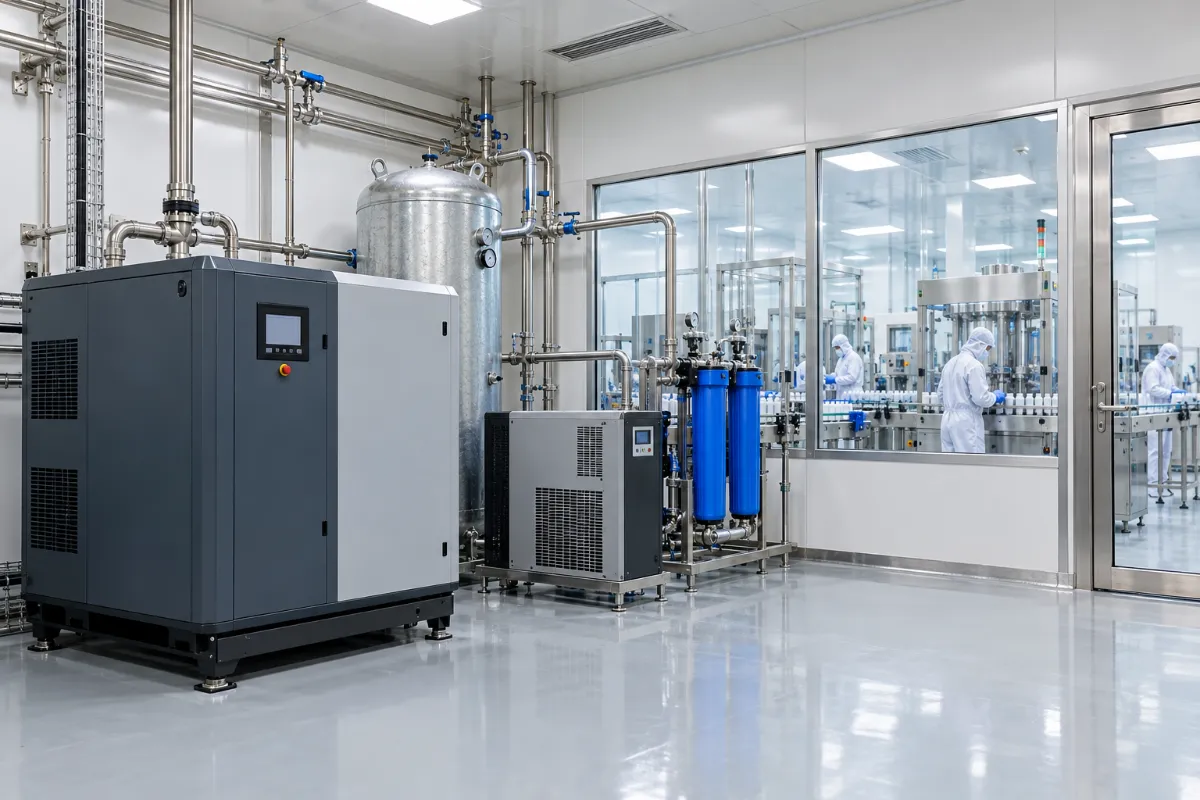
How to Size a Rotary Screw Compressor Without Overspending
Compressor sizing begins at the point of use, not at the motor nameplate.
The buyer must establish the airflow that equipment requires, the minimum acceptable operating pressure, and how many users may operate simultaneously.
Oversizing can increase both equipment cost and energy consumption. Undersizing can produce falling pressure, lost production, and premature equipment stress.
Step 1: Determine Required Airflow
List the equipment consuming compressed air, including pneumatic tools, actuators, production machines, cleaning operations, and process equipment.
Identify normal consumption, sustained maximum consumption, and short-duration peaks.
For an existing installation, measured flow data is preferable to estimates based only on connected equipment ratings.
For a new installation, request realistic consumption figures from the machinery suppliers and evaluate simultaneous operation.
Avoid adding all individual maximum capacities together unless the equipment can actually operate at maximum demand simultaneously.
Step 2: Establish the Required Pressure
Identify the minimum pressure needed by the most demanding critical application.
Then account for actual or calculated losses through distribution piping, air treatment, controls, and connections.
Specify the compressor's required operating pressure accordingly, with an appropriate engineering allowance.
Do not select an unnecessarily high-pressure model merely because it appears to provide additional flexibility.
Step 3: Evaluate the Demand Pattern
Determine how long the compressor must operate at normal, minimum, and maximum demand.
A facility with consistently high demand may justify a fixed-speed machine sized near its working capacity.
A facility with substantial variation may justify a VSD compressor or a staged system.
If demand changes significantly between shifts, the operating strategy must account for those differences.
Step 4: Account for Site Conditions
Ambient temperature, ventilation, inlet air cleanliness, elevation, and available cooling all affect compressor operation.
Electrical voltage, frequency, power quality, and available starting capacity must also match the proposed equipment.
Do not assume that rated performance under standard test conditions will be identical under every installation condition.
Step 5: Review Future Expansion Separately
Expected production growth should be considered, but speculative expansion is not a strong reason to install excessive capacity today.
If future demand is uncertain, a modular compressor station may offer better flexibility than one oversized machine.
I would distinguish confirmed expansion plans from optional capacity allowances and evaluate the cost of adding another compressor later.
Single-Stage vs Two-Stage Compression: A Separate Decision
Fixed-speed and variable-speed control should not be confused with single-stage and two-stage compression.
Speed control determines how compressor capacity responds to changing airflow demand. Compression stages describe how the required pressure rise is produced.
A two-stage rotary screw compressor divides compression between two stages, typically incorporating intermediate cooling or temperature management to improve compression efficiency under suitable conditions.
Two-stage designs can be worth evaluating for high-utilization installations where package efficiency has a strong influence on lifetime cost.
However, additional compression stages introduce their own equipment and maintenance considerations.
A two-stage compressor is not automatically the most economical option for every operating pressure or capacity.
Likewise, a two-stage machine may be fixed speed or variable speed depending on its motor and control arrangement.
For buyers evaluating higher-utilization systems, the AIRNOVEX two-stage screw compressor range offers additional information on available power classes, operating pressures, and compression configurations.
I would compare complete package power at the intended duty point rather than assume that either two-stage compression or VSD control guarantees the lowest electricity consumption.
Maintenance and Reliability: What Changes With VSD?
Both fixed-speed and variable-speed rotary screw compressors require routine maintenance.
For oil-injected machines, typical maintenance activities include inspecting and replacing inlet filters, lubricant, lubricant filters, and air-oil separators according to the manufacturer's requirements.
Cooling systems, electrical connections, control sensors, condensate handling, and mechanical components also require inspection.
The VSD system adds electronic components, but that does not automatically make it unreliable or significantly more expensive to maintain.
Fixed-Speed Maintenance Considerations
Fixed-speed machines generally use established motor and control arrangements. Maintenance personnel may find fault diagnosis more straightforward when fewer electronic control components are involved.
However, frequent loading, unloading, or starting can place demands on controls and related components.
Motor starting methods must also be suitable for the electrical supply and operating schedule.
A poorly controlled fixed-speed compressor may accumulate unnecessary running hours even when the facility requires little air.
I would examine actual operating behavior before assuming that the simpler machine necessarily has the lowest maintenance cost.
VSD Maintenance Considerations
A variable frequency drive contains power electronic components that are sensitive to operating conditions.
Drive cabinet temperature, airflow, dust accumulation, electrical connections, and cooling-system condition deserve particular attention.
Depending on the equipment design, maintenance may include drive cooling fans, capacitors, filters, or other components at intervals specified by the drive manufacturer.
Replacement drive modules or specialized control components may also have different procurement lead times from conventional motor starting equipment.
Before purchasing, I would verify local service capability, diagnostic access, spare-part availability, and the replacement strategy for critical electronic components.
Does Variable Speed Extend Compressor Life?
Controlled motor acceleration can reduce certain starting stresses compared with some conventional starting arrangements. VSD control may also reduce repeated load/unload activity under appropriate operating conditions.
Neither benefit proves that every VSD compressor will last longer than a fixed-speed alternative.
Mechanical service life depends on operating temperature, lubrication, load conditions, air-end design, maintenance, contamination, and installation quality.
A fixed-speed compressor operating within its intended duty cycle and receiving proper maintenance can provide dependable service.
A VSD compressor exposed to excessive heat, contaminated cooling airflow, or unsuitable electrical conditions can develop problems despite its more sophisticated controls.
Reliability should be assessed through the complete equipment design and support arrangement, not inferred from the drive label.
Electrical Supply, Harmonics, and Installation Requirements
Variable frequency drives change how electrical power is supplied to the motor. This introduces considerations that may not apply in the same way to a conventional fixed-speed package.
Depending on the drive design and installation, relevant issues include harmonic distortion, electromagnetic interference, grounding, cable arrangement, and drive cooling.
The required mitigation depends on the electrical system, transformer capacity, nearby sensitive equipment, and applicable installation requirements.
A supplier should be able to confirm the drive's input requirements and identify any necessary reactors, filters, or other protective measures.
I would also check whether the facility has sufficient ventilation to remove compressor and drive heat under maximum expected ambient conditions.
Conventional fixed-speed compressors have electrical requirements of their own. Starting current, starting method, motor protection, cable sizing, and distribution capacity must be verified.
For either machine, electrical installation should follow the approved equipment documentation and applicable electrical standards.
Common Buying Mistakes That Increase Operating Cost
Several selection mistakes repeatedly appear in technically weak compressor proposals. Most are not caused by choosing the wrong technology in isolation. They result from evaluating a compressor without considering how it will operate within the system.
Choosing Based Only on Motor Horsepower
Motor horsepower does not establish delivered airflow, efficiency, or actual package electrical input.
Always compare capacity and input power at the required operating pressure.
Assuming VSD Automatically Means Large Energy Savings
The savings depend on the baseline control method, demand profile, compressor efficiency, and system settings.
Ask for a calculation that uses verifiable operating data and manufacturer performance figures.
Buying Excess Capacity for Uncertain Future Needs
Oversizing may increase unloading, cycling, and inefficient operation.
Consider staged expansion or a multi-compressor arrangement when future demand remains uncertain.
Ignoring Minimum VSD Capacity
A VSD compressor cannot necessarily operate efficiently down to zero airflow.
Confirm the minimum continuous delivery and the control behavior below that limit.
Neglecting Leaks and Unregulated Demand
Leaks, inappropriate open blowing, faulty drains, and unnecessarily high pressure can increase apparent compressor demand.
Correcting these problems may reduce the capacity required from the new machine.
Comparing Different Pressure Ratings
A compressor rated at one discharge pressure should not be compared directly with another machine at a different pressure without accounting for the effects on airflow and power.
Require common operating conditions for a fair evaluation.
Overlooking Air Treatment
Moisture, oil aerosol, and particulate requirements affect the complete system configuration.
Dryers and filters also create pressure losses and may consume additional electricity.
Air quality must be specified independently of compressor speed control.
What I Would Request Before Accepting a Compressor Quotation
A useful quotation should establish what the equipment will deliver, how its performance was determined, and what is included in the proposed package.
I would not make a final selection from a motor rating, pressure range, and equipment photograph alone.
| Information Required | Why It Matters | Acceptable Supporting Evidence |
|---|---|---|
| Rated delivered airflow | Confirms capacity at the required pressure | Technical datasheet with reference conditions |
| Rated discharge pressure | Establishes the intended operating point | Rated working pressure and control limits |
| Total package input power | Supports energy-cost comparison | Declared or tested package kW |
| Part-load performance | Determines economics under variable demand | Power-versus-flow performance data |
| Minimum VSD capacity | Identifies continuous turndown limitations | Approved operating range and control description |
| Unloaded power | Supports fixed-speed energy modeling | Manufacturer data at specified conditions |
| Cooling and ventilation requirements | Reduces overheating risk | Installation and service documentation |
| Electrical requirements | Confirms compatibility with available power | Voltage, frequency, phase, and electrical drawings |
| Air treatment scope | Defines delivered air quality and additional pressure loss | Dryer, filter, and treatment specifications |
| Service and warranty scope | Clarifies ownership and downtime exposure | Written warranty, maintenance, and parts terms |
For a VSD machine, I would place particular importance on the power-versus-flow curve and the minimum continuous operating point.
For a fixed-speed machine, unloaded power and the installed control strategy deserve equal attention.
For both, the supplier should explain any differences between standard laboratory conditions and the planned installation.
How to Evaluate Compressor Manufacturers and Suppliers
Supplier evaluation should focus on technical clarity, documentation, service support, and the ability to match equipment to the intended duty cycle.
A supplier offering a lower equipment price may still be suitable if the proposed compressor meets the actual requirements and the operating data is credible.
A higher-priced machine may justify the premium through verified energy performance, better integration, or improved support. The additional cost should have an identifiable purpose.
I would evaluate prospective suppliers on the following criteria:
-
Application understanding: Can the supplier explain the recommended configuration using pressure, airflow, and operating-hour data?
-
Performance transparency: Are full-load and part-load performance values available under defined conditions?
-
Configuration flexibility: Can the compressor, dryer, receiver, and filtration equipment be matched to the complete system?
-
Documentation: Are electrical drawings, operating instructions, maintenance schedules, and applicable conformity documents available?
-
Spare parts: Are service components and critical replacement parts clearly identified?
-
After-sales support: Is the procedure for technical assistance, troubleshooting, warranty claims, and replacement parts defined?
-
Commercial transparency: Does the quotation clearly state exclusions, delivery scope, and installation responsibilities?
AIRNOVEX is one manufacturer and supplier to consider for industrial screw compressor projects involving fixed-speed, variable-speed, and two-stage configurations.
I would apply the same evaluation criteria to AIRNOVEX as to any other supplier: confirm the exact model, rated performance, component configuration, documentation, service arrangements, and project-specific quotation before purchasing.
No manufacturer should receive preference solely because a product carries a higher-efficiency marketing label.
A Practical Selection Method for Engineering and Purchasing Teams
Before choosing a machine, I would work through the decision in the following order.
-
Identify the required air quality. Establish moisture, particulate, and oil-content requirements so the complete system can be specified correctly.
-
Determine actual pressure demand. Use the minimum acceptable point-of-use pressure and realistic distribution losses.
-
Measure or estimate airflow. Separate continuous consumption, variable production demand, and short-duration peaks.
-
Review existing losses. Correct significant leakage, improper drains, and unnecessary pressure before sizing replacement equipment.
-
Develop the load profile. Record time spent at each meaningful operating level.
-
Shortlist compressor configurations. Compare fixed speed, VSD, and staged alternatives that can all satisfy the duty requirements.
-
Obtain comparable performance data. Use package kW and airflow at consistent reference conditions.
-
Calculate lifecycle economics. Include installed cost, annual electricity use, maintenance, and realistic service assumptions.
-
Review reliability and support. Check redundancy, critical spares, electrical compatibility, and maintenance capability.
-
Validate the final selection. Confirm the approved technical specification and acceptance criteria before ordering.
For a significant compressor investment, energy analysis software can also improve the quality of the assessment.
The Department of Energy's MEASUR platform includes compressed-air assessment capabilities derived from established industrial system analysis tools. It can support structured evaluation when the necessary input data is available.
The software does not eliminate the need for accurate field measurements or manufacturer performance information.
My Final Recommendation: Choose by Operating Profile, Not by Drive Type
If I were choosing a compressor for a production process with consistently high airflow demand, I would place an efficient fixed-speed rotary screw compressor near the top of the shortlist.
If the process experienced meaningful airflow fluctuations throughout its operating schedule, I would prioritize a VSD comparison and require part-load performance data before accepting the projected electricity savings.
For a large installation with a reasonably stable baseline and a variable component, I would examine fixed-speed base-load capacity combined with VSD trim control. Proper sequencing and adequate storage would be essential parts of that evaluation.
If demand regularly fell to a very small fraction of installed capacity, I would investigate a smaller compressor, staged equipment, or system demand reduction before purchasing a large machine with an extended turndown claim.
For critical production, I would evaluate redundancy independently of efficiency. A slightly lower annual electricity bill has limited value if the compressor arrangement cannot support the required production availability.
My central purchasing judgment is that the most economical compressor is the one that delivers the required air quality, pressure, and airflow with the lowest defensible lifecycle cost.
The drive technology matters. The operating conditions matter more.
Frequently Asked Questions
1. Is a variable-speed air compressor better than a fixed-speed compressor?
Answer: A variable-speed compressor is generally worth evaluating when compressed air consumption changes significantly during operation. A fixed-speed compressor may be more economical when demand is stable and the machine operates close to its rated capacity. Compare delivered airflow, package power, pressure, operating hours, and installed cost before deciding. If the facility already operates multiple compressors, also evaluate whether a fixed-speed base-load machine and VSD trim machine would be more efficient than a single replacement.
2. How much electricity can a VSD screw compressor save?
Answer: There is no dependable universal savings percentage. Actual savings depend on the existing compressor's control method, unloading behavior, system pressure, airflow variations, and the proposed VSD machine's part-load performance. Record the operating profile and obtain power-versus-flow data for both alternatives. Calculate annual kWh for each operating period, then compare the results. Avoid applying advertised savings figures from unrelated installations.
3. Are fixed-speed screw compressors suitable for continuous operation?
Answer: Many industrial fixed-speed rotary screw compressors are designed for continuous-duty applications, provided they operate within the manufacturer's specified conditions. Stable, high-utilization demand can make fixed-speed operation economically attractive. Proper cooling, lubrication, ventilation, electrical supply, and scheduled maintenance remain essential. Confirm the specific model's duty rating and installation requirements rather than assuming all rotary screw compressors have identical operating capabilities.
4. Does a variable-speed compressor need an air receiver?
Answer: Yes, receiver storage should still be evaluated for a VSD installation. Storage helps absorb rapid demand changes, supports pressure stability, and can reduce unnecessary compressor speed adjustments. The required volume depends on airflow variation, allowable pressure change, compressor response, control settings, and system layout. A VSD machine does not eliminate the need for storage, and a receiver cannot compensate for insufficient continuous compressor capacity.
5. Is a VSD compressor more expensive to maintain?
Answer: A VSD compressor has additional electronic components that require appropriate cooling, electrical protection, and maintenance. However, actual maintenance cost depends on equipment quality, operating conditions, service intervals, and parts availability. Fixed-speed compressors also incur maintenance costs and may experience unnecessary operating hours under inefficient controls. Request model-specific maintenance schedules, replacement-part information, and service terms before estimating the ownership cost difference.
6. Can I convert my existing fixed-speed screw compressor to variable speed?
Answer: Some conversions may be technically possible, but adding a variable frequency drive to an existing motor is not sufficient by itself. The motor, air-end operating speeds, lubrication, cooling, controls, electrical protection, and mechanical limits must all support variable-speed operation. An unsuitable conversion can create reliability or performance problems. Obtain an engineering assessment from the equipment manufacturer or a qualified compressor specialist before proceeding.
7. Which is better for a factory with several production lines?
Answer: The best configuration depends on whether the lines operate together or independently. If several production lines start and stop at different times, a VSD compressor may follow changing demand more effectively. For larger systems, fixed-speed compressors can provide stable baseline airflow while a VSD compressor handles fluctuations. Measure the demand profile, check minimum VSD capacity, and verify sequencing so that compressor combinations can cover the full operating range without excessive cycling.
8. What information should I provide when requesting a compressor quotation?
Answer: Provide required airflow, minimum point-of-use pressure, estimated pressure losses, daily and annual operating hours, load variation, electrical supply, ambient conditions, and compressed-air quality requirements. Include existing compressor information and measured operating data when available. Ask for full-load and part-load package power, the proposed control strategy, installation requirements, maintenance information, and a clear equipment scope. Comparable specifications make fixed-speed and VSD quotations much easier to evaluate.
Technical References and Sources
The following references support the control principles, performance metrics, and documented project figures discussed above. Older engineering publications are identified by their publication years rather than presented as new research. Numerical cost examples elsewhere in this article are explicitly hypothetical.
-
Department of Energy and Compressed Air Challenge.Improving Compressed Air System Performance: A Sourcebook for Industry, Third Edition. 2016. Particularly relevant are the sections covering compressor controls, variable-speed performance, air storage, and multiple-compressor operation.
Read the technical sourcebook (PDF). -
National Renewable Energy Laboratory.Uniform Methods Project: Chapter 22, Compressed Air Evaluation Protocol. 2015. Provides a measurement and verification framework for evaluating compressed-air energy savings, including the importance of identifying the baseline control strategy.
Read the evaluation protocol (PDF). -
Department of Energy, Better Buildings & Better Plants Initiative.PLENCO: Achieving Compressed Air Savings through System Upgrades. Published February 28, 2023. Documents compressor sequencing, demand reduction, equipment replacement, project costs, and measured energy savings reported by the participating company.
Read the PLENCO project case study. -
Compressed Air and Gas Institute (CAGI).Air Compressor Performance Verification and Testing Results. Industry technical reference explaining standardized compressor datasheets, specific package power, and performance comparison methods.
Review compressor performance verification resources.
About This Technical Guide
This article is published by AIRNOVEX as an educational resource for industrial compressed-air equipment selection and procurement. The comparisons reflect engineering principles, published technical references, and editorial evaluation of equipment configurations. First-person recommendations represent selection judgments, not claims of personally conducted tests or verified customer installations.
Actual compressor performance must be established using the relevant equipment datasheets, approved specifications, operating conditions, and, where necessary, independently verified measurements.
Disclaimer
This article provides general technical and purchasing guidance and does not constitute a certified engineering design, site-specific energy audit, performance warranty, safety assessment, or financial guarantee.
Illustrative prices, electricity rates, operating hours, power values, energy calculations, and payback periods are assumptions used to explain evaluation methods. They should not be interpreted as manufacturer quotations, market averages, tested product performance, or promised customer results.
Actual compressor selection, installation, electrical work, pressure-vessel specification, maintenance, and safety compliance must be reviewed by qualified personnel using the applicable equipment documentation and installation requirements. Performance and operating costs may vary substantially with pressure, airflow, control strategy, electrical conditions, ambient environment, air treatment, system losses, and maintenance.