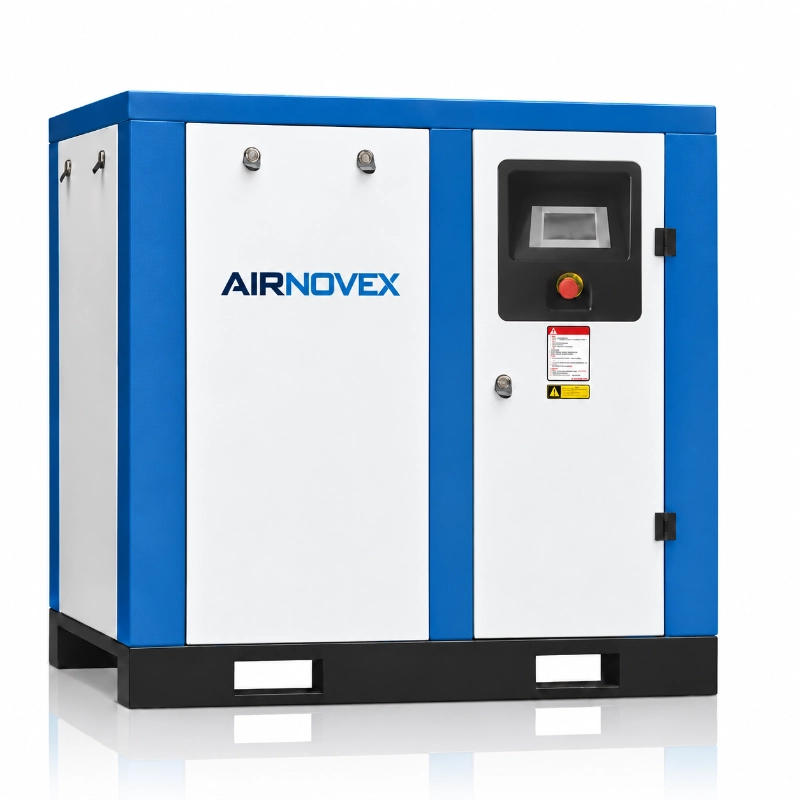
Make compressed air follow production demand
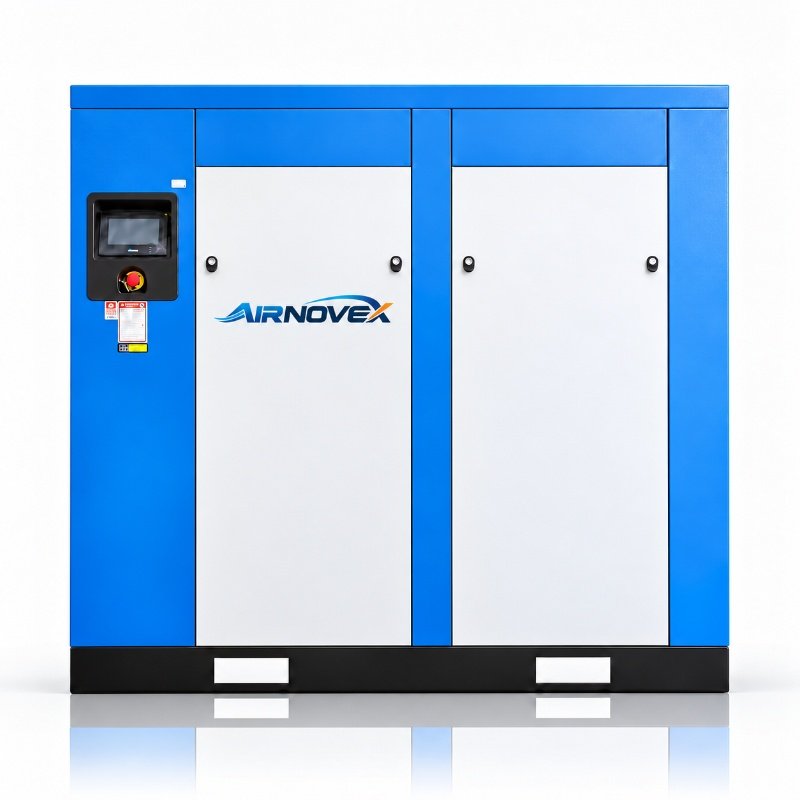
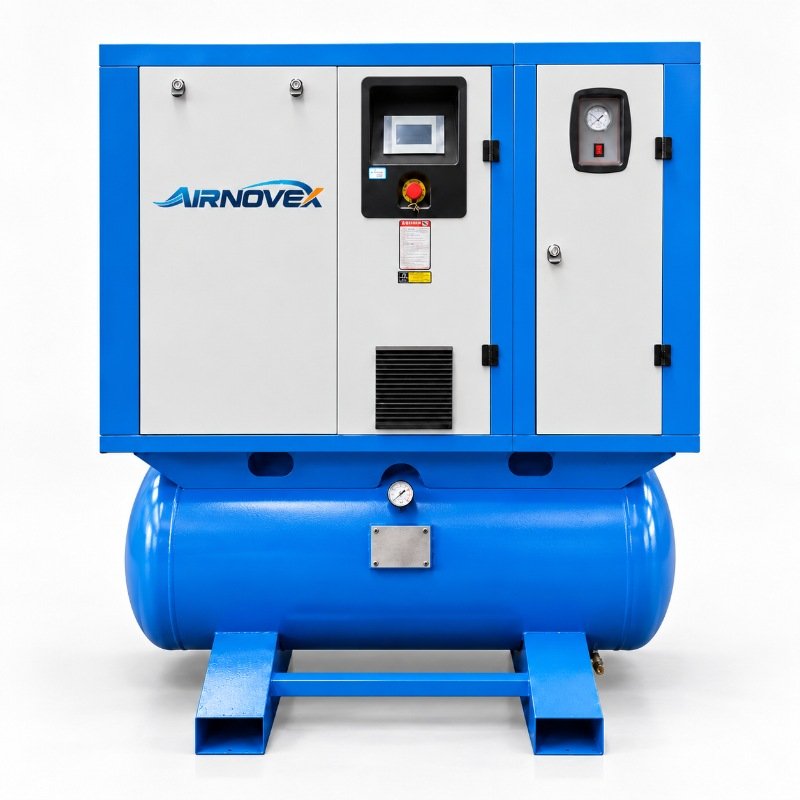
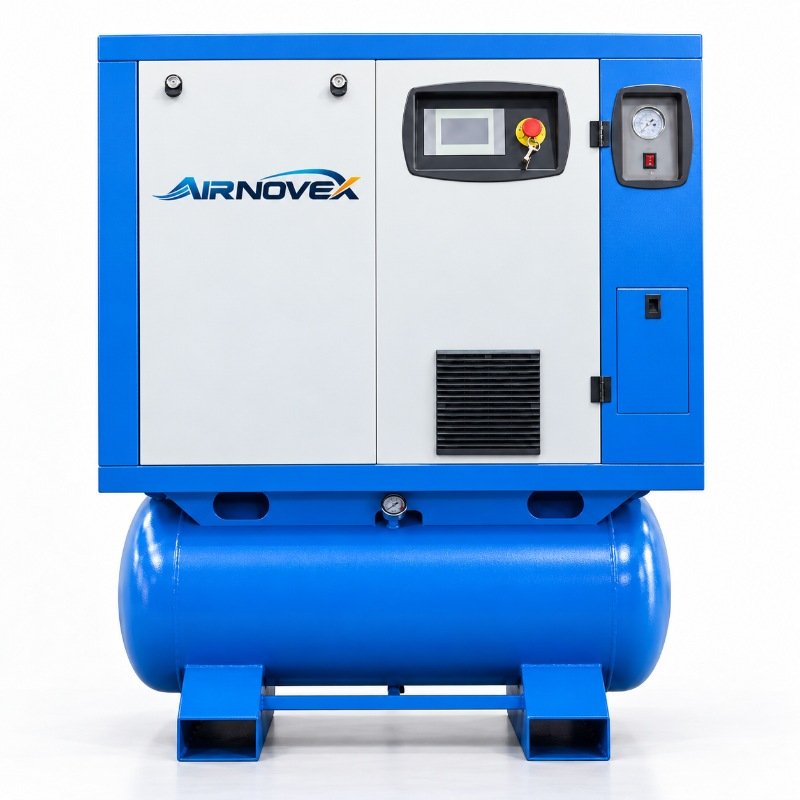
An industrial air system rarely operates at exactly the same load throughout the day. Machines cycle, shifts change, and multiple air users come online at different times. The AIRNOVEX SM Series uses single-stage rotary screw compression with variable speed control to respond to those changing requirements.
For buyers, the practical question is whether a compressor can provide the required air at the actual working pressure without spending unnecessary time producing more capacity than the plant needs. That is where a properly sized variable speed screw air compressor can offer an advantage.
Six points to evaluate beyond motor power
Compressor performance depends on the interaction between air demand, drive control, compression, pressure settings and the wider installation.
Airflow adjusts with demand
Variable speed control changes compressor output within the machine's approved range as plant consumption changes. This suits production lines with regular load variation.
Single-stage screw compression
A rotary screw airend supplies the continuous airflow expected in many industrial utility systems, while the motor and control settings determine how the package responds to demand.
Less dependence on unloaded running
When the operating load falls within the usable speed range, modulation can reduce time spent running without producing useful air. Actual benefit depends on the demand profile.
Managed motor acceleration
The variable frequency drive controls motor acceleration. Electrical compatibility and drive settings must still be confirmed for the final installation.
Pressure-led operation
Matching compressed-air output to system demand can help limit unnecessary pressure variation. Piping losses, storage and downstream controls remain part of the result.
Designed for system integration
A standalone compressor can be specified alongside an appropriately sized receiver, dryer and filters, so the supplied air meets the pressure and quality needs of the application.
Need the right SM model rather than the largest motor?
Share your pressure, normal and peak airflow, operating hours and site power supply for a configuration review.
Where changing air demand creates a reason to use VSD
The best application is defined by its air-consumption pattern, not simply by the industry name.
CNC machining
Air for tool changers, pneumatic clamping and automation can vary as machines enter different cycles or idle between jobs.
Packaging lines
Actuators, air cylinders and handling equipment create different flow requirements during startup, production and changeovers.
Automotive assembly
Shared compressed-air networks may serve tools and automated stations that do not operate simultaneously.
Textile facilities
Multiple machines and operating schedules can create a variable plant load that should be measured before compressor selection.
General manufacturing
Mixed-use workshops often combine air tools, pneumatic controls and intermittent process equipment on one supply network.
Plant utility systems
Where an existing system has stable base demand plus changing peaks, the SM Series can be evaluated as a trim-air source.
How to specify the right SM Series compressor
Start with what the equipment must deliver at the point of use. An identical motor rating does not guarantee identical delivered airflow at every pressure.
Record minimum, normal and peak air consumption
Use a recent flow survey where available, or list the equipment that runs simultaneously. Peak duration matters as much as peak size.
Confirm working pressure at the machines
Allow for the real pressure losses through dryers, filters and distribution piping, rather than selecting solely from the receiver gauge reading.
Check pressure-specific free air delivery
Compare each proposed model's rated FAD in CFM or m3/min at the required discharge pressure. Verify the minimum controllable output as well.
Describe the operating schedule
Share hours per shift, days per week, shutdown periods and whether production is steady or changes frequently.
Validate the installation conditions
Confirm voltage, frequency, phase, ambient temperature, ventilation, altitude, service clearance and available floor space.
Single-stage VSD or another compressor configuration?
Consider the operating pattern before choosing a compression and control arrangement.
| Operating requirement | Configuration to consider | Buyer check |
|---|---|---|
| Air demand changes during the working day | SM Series single-stage VSD | Check that normal and low demand remain within the proposed model's controllable airflow range. |
| Demand stays close to full load for long periods | Fixed-speed screw compressor | Compare purchase cost and measured package power at the actual operating point. |
| Large base demand plus variable peaks | Fixed-speed base-load plus VSD trim | Review machine sequencing, standby capacity and receiver storage. |
| High-duty projects with demanding efficiency targets | Single-stage versus two-stage proposals | Compare verified pressure-specific performance and total ownership cost, not stage count alone. |
Related equipment: fixed-speed screw compressors and two-stage screw compressors. Final selection should be based on model-specific performance data.
Specify the compressor together with its air treatment
The compressor provides airflow; the rest of the system determines how that air is stored, dried, filtered and delivered to production equipment.
Air receiver
Stored air can buffer short demand peaks and support pressure management. Receiver sizing depends on flow, controls and load variation.
Review air receiversAir drying
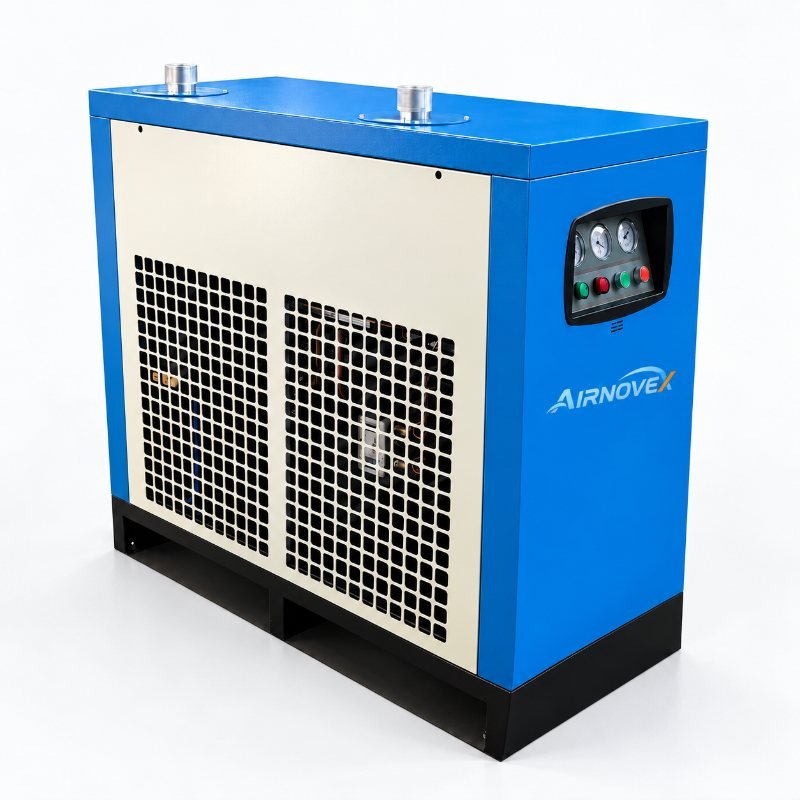
Use a dryer type and capacity that suit the required pressure dew point, inlet conditions and downstream moisture tolerance.
Explore air dryersFiltration and drainage
Choose filtration and condensate management around particle, oil and water requirements. An oil-injected compressor is not an oil-free air source.
Explore air treatmentFor applications with direct product contact or strict air-purity requirements, confirm the required air-quality class and entire treatment system before ordering.
Plan for accessible, serviceable operation
Ventilation and ambient conditions
Provide a suitable cooling-air path and keep discharge heat from recirculating into the compressor inlet. Confirm the exact model's allowable ambient range.
Electrical supply and protection
Match the supplied compressor to the installation voltage, frequency, phase and local electrical requirements before commissioning.
Routine service access
Leave room for inspection and replacement of filters, lubricant and separator elements. Follow the approved manual for intervals and replacement specifications.
System monitoring
Track working pressure, run hours, loaded behavior, service alarms and downstream pressure drop. Changes in these indicators can reveal system problems early.
What to confirm with AIRNOVEX before ordering
For distributors, OEM projects and plant buyers, a quotation should define the machine being supplied and the work the complete air system is expected to perform.
Approved model and operating point
Review pressure, rated flow, minimum usable output, motor configuration and selected electrical supply.
Equipment and accessory scope
Clarify whether the quotation includes the compressor alone or also the receiver, dryer, filters and connections.
OEM and destination requirements
Identify requested branding, voltage, documentation and market-specific requirements early, subject to configuration availability.
Service and commercial terms
Ask for consumables, spare parts, warranty scope, delivery terms and any commissioning support in the formal proposal.
SM Series frequently asked questions
Practical answers for buyers evaluating a single-stage variable speed screw air compressor.
What type of air compressor is the AIRNOVEX SM Series?
The SM Series is a single-stage, oil-injected rotary screw air compressor range with variable speed control. It is intended for industrial compressed-air applications where airflow requirements can change over the operating day.
How do I select the correct SM Series size?
Start with the required free air delivery at the actual working pressure, then record minimum, normal and peak demand. Include the operating schedule, plant power supply and air-quality requirements. Compare these conditions with a model-specific performance sheet before selecting motor power.
Is a variable speed screw compressor always more efficient than fixed speed?
No. A variable speed compressor can reduce unloaded running where demand varies and stays within its useful control range. For nearly constant high demand, a well-sized fixed-speed compressor may be more economical. Compare measured duty profiles and performance data.
Can an SM Series compressor run during long production shifts?
Rotary screw compressors are commonly used for extended industrial operation, but the suitable duty depends on the selected model, cooling, ambient conditions and service plan. Confirm the intended operating hours and installation conditions during selection.
Does the SM Series supply oil-free compressed air?
No. The SM Series is an oil-injected screw compressor range. Where the process has strict oil, moisture or particle limits, specify downstream air treatment or assess an oil-free compressor solution against the required air-quality class.
Do I still need a receiver tank and air dryer with a VSD compressor?
Variable speed control does not replace storage or air treatment. A receiver may help manage short peaks, while a dryer and filters are selected according to moisture and contamination limits at the point of use. The final arrangement depends on the complete system.
Can AIRNOVEX review voltage, frequency or OEM requirements?
AIRNOVEX accepts configuration and OEM enquiries. Provide the destination country, voltage, frequency, phase, quantity and requested branding or documentation. Feasible options must be confirmed for the selected model before ordering.
What should I send to request an SM Series quotation?
Send your required working pressure, normal and peak airflow, daily operating hours, application, voltage and frequency, destination country and quantity. Add any receiver, dryer, filtration or OEM requirements. An existing compressor nameplate can also help.
Get an SM Series quotation based on your real air demand
Send the details you already have. If you are replacing a compressor, the existing nameplate and a brief description of production are useful starting points.
Include these project details
- Required pressure and normal/peak airflow
- Operating hours and application
- Voltage, frequency and destination country
- Air treatment and storage requirements
- Quantity and any OEM specifications
Not sure about the exact model? Describe the machines using air and the operating schedule so AIRNOVEX can review suitable options.