Choosing a 75 HP rotary screw compressor is not simply a matter of matching horsepower to an air demand number. In my view, the real buying decision depends on production requirements, operating hours, pressure stability, energy consumption, maintenance planning, and the long-term cost of compressed air. A properly selected 75 HP rotary screw compressor can support demanding industrial applications, but an incorrectly sized system can create unnecessary energy waste and operational problems. This guide explains the engineering factors I usually consider when evaluating industrial air compressor systems, including variable speed technology, air quality requirements, lifecycle costs, and supplier selection.
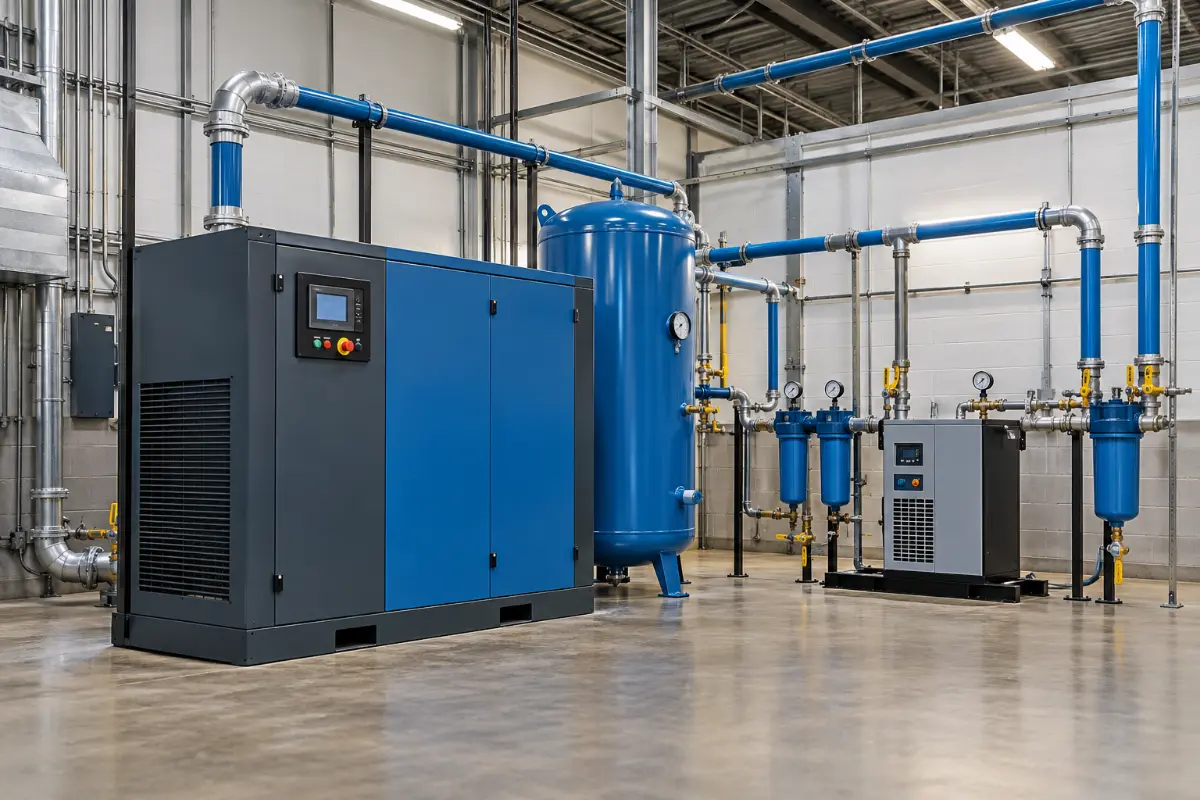
Understanding What a 75 HP Rotary Screw Compressor Really Means
A 75 HP rotary screw compressor belongs to the medium industrial compressor category. The “75 HP” rating describes the motor power, but it does not directly tell the buyer how much usable compressed air the machine will deliver in every condition.
For purchasing decisions, I would prioritize three technical values before looking at price:
Air delivery capacity: measured by CFM or m³/min at a specific working pressure.
Operating pressure: commonly specified in PSI or bar depending on system requirements.
Energy efficiency: how effectively electrical power is converted into compressed air.
A 75 HP compressor may be suitable for manufacturing plants, automotive production, metal processing, packaging operations, CNC machining facilities, and other industrial environments where compressed air demand is continuous or relatively stable.
The mistake I often see in compressor selection discussions is focusing only on motor size. Horsepower is only one part of the equation. The actual production requirement should determine the compressor configuration.
Typical performance range of a 75 HP industrial compressor
The exact output depends on compressor design, pressure setting, cooling method, and manufacturer specifications. The following table shows a general engineering reference range rather than a guaranteed machine specification.
| Parameter | Typical Range | Why It Matters |
|---|---|---|
| Motor power | 75 HP (approximately 56 kW) | Determines available mechanical power for compression |
| Air output | Approximately 300–400 CFM in many industrial configurations | Helps determine whether the compressor can support production demand |
| Working pressure | 100–175 PSI commonly available depending on design | Affects energy consumption and equipment compatibility |
| Drive type | Fixed speed or variable speed drive | Influences efficiency under changing demand conditions |
| Cooling method | Air cooled or water cooled | Impacts installation requirements and maintenance planning |
For a buyer comparing different models, I’d recommend requesting a complete performance sheet instead of relying only on horsepower. A professional supplier should provide airflow output, pressure conditions, motor efficiency information, noise level, service requirements, and recommended operating limits.
How to Determine If a 75 HP Compressor Matches Your Application
The correct compressor size starts with understanding the compressed air demand profile. Industrial air consumption is rarely constant throughout the day. Some facilities have steady demand, while others experience large fluctuations caused by multiple production lines starting and stopping.
In my view, the first question should not be “What horsepower compressor should I buy?” The better question is “What compressed air system behavior does my operation require?”
Key factors I evaluate before recommending a configuration
Average air demand: The normal compressed air requirement during production.
Peak air demand: Short periods when multiple machines operate simultaneously.
Daily operating hours: A compressor running 8 hours per day has a different economic profile from one running 24/7.
Required pressure: Higher pressure settings usually increase energy consumption.
Air quality standard: Different industries require different filtration and drying levels.
Future expansion: Additional production equipment may change air demand within several years.
A common purchasing mistake is selecting a compressor based on current demand only. If the production environment is expected to expand, leaving reasonable capacity margin can prevent another major equipment investment shortly afterward.
Application examples for a 75 HP air compressor
| Application Type | Compressed Air Requirement Characteristics | Selection Consideration |
|---|---|---|
| CNC machining | Stable demand with sensitivity to air quality | Focus on filtration, dryer compatibility, and pressure stability |
| Automotive components | Continuous production cycles | Energy efficiency and reliability become major factors |
| Metal fabrication | High intermittent demand from tools and equipment | Consider storage capacity and demand fluctuation |
| Packaging lines | Frequent operation cycles | Stable pressure control is important |
| General manufacturing | Mixed compressed air usage | System assessment is required before sizing |
Fixed Speed vs Variable Speed 75 HP Rotary Screw Compressors
One of the most important decisions in modern compressor purchasing is choosing between fixed speed technology and variable speed drive (VSD) technology.
A fixed speed compressor operates at a constant motor speed. It can be a practical choice when compressed air demand remains consistent for most of the operating schedule.
A variable speed compressor adjusts motor speed according to demand changes. I usually consider this option when the air requirement changes significantly during production hours because reducing unnecessary motor operation can improve operating efficiency.
| Comparison Factor | Fixed Speed Compressor | Variable Speed Compressor |
|---|---|---|
| Motor operation | Runs at constant speed | Adjusts speed based on demand |
| Best suited for | Stable compressed air consumption | Changing production demand |
| Initial investment | Usually lower | Usually higher |
| Energy management | Less flexible during low demand periods | Designed to reduce wasted energy during demand changes |
| System planning | Requires accurate sizing | Provides more flexibility for variable loads |
A VSD compressor is not automatically the right choice for every facility. If the air demand remains constant around the clock, the additional investment may not provide the expected benefit. I’d choose based on operating conditions rather than technology preference alone.
Why Air System Design Matters More Than Compressor Size Alone
A compressor is only one part of a compressed air system. The surrounding equipment often determines whether the system performs efficiently.
A complete industrial compressed air setup may include:
Rotary screw compressor
Air receiver tank
Refrigerated or desiccant air dryer
Line filters
Compressed air piping network
Automatic drain systems
Monitoring and control equipment
A well-designed system reduces pressure loss and improves operational stability. A powerful compressor connected to poor piping or inadequate air treatment equipment may still create production issues.
For technical specifications and compressor system information, buyers can review additional engineering resources available through the manufacturer’s product documentation, including solutions from AIRNOVEX when evaluating industrial compressed air equipment options.
Common installation mistakes I would avoid
Installing the compressor in an area without sufficient ventilation.
Ignoring pressure drops caused by undersized piping.
Selecting dryers and filters without considering actual airflow requirements.
Failing to calculate long-term electrical operating costs.
Choosing equipment only by purchase price.
The lowest purchase price is rarely the lowest ownership cost. For industrial equipment expected to operate for years, energy consumption, maintenance accessibility, and supplier support should be included in the evaluation.
Energy Consumption: The Real Cost Behind a 75 HP Compressor Investment
When evaluating a 75 HP rotary screw compressor, I usually consider electricity consumption as one of the most important financial factors. The purchase price is visible on a quotation, but the energy cost continues every month throughout the equipment’s operating life.
For many industrial facilities, compressed air is among the largest electricity-consuming systems because compressors often operate for thousands of hours each year. The exact percentage varies significantly by industry, production schedule, and equipment mix, so I avoid using broad assumptions without a system assessment.
According to the U.S. Department of Energy, compressed air systems can represent a significant portion of industrial electricity use, and improving system efficiency often requires attention to demand management, leakage reduction, and equipment selection rather than simply replacing one compressor with another. The department provides compressed air efficiency guidance through its Better Buildings resources. (Source: U.S. Department of Energy, 2024)
For buyers comparing equipment, I recommend calculating the total operating picture:
Motor power consumption
Annual operating hours
Electricity cost
Load and unload behavior
Variable speed performance under changing demand
Maintenance expenses over the expected service period
Example operating cost calculation method
| Cost Factor | Example Calculation | Purpose |
|---|---|---|
| Motor power | 56 kW rated motor | Starting point for energy estimation |
| Operating hours | 4,000 hours/year | Defines annual usage level |
| Average load factor | Depends on production demand | Shows actual energy consumption |
| Electricity price | Facility-specific rate | Determines annual energy expense |
| Efficiency improvements | Based on system changes | Estimates potential savings opportunities |
The most accurate comparison is not between compressor prices. It is between expected lifetime operating costs under similar working conditions.
Single Stage vs Two Stage Compression Technology
Two stage compression, also called two-stage screw compression, is another option considered in larger industrial compressed air applications. Instead of compressing air through a single compression process, the system uses two compression stages to improve efficiency under certain operating conditions.
I usually look at two main questions before considering this technology:
How many hours will the compressor operate each year?
Does the application justify the additional engineering complexity and investment?
Two stage systems can be attractive for facilities requiring continuous operation, higher efficiency targets, or demanding pressure requirements. However, the correct choice depends on actual operating data, not simply the presence of advanced technology.
| Feature | Single Stage Screw Compressor | Two Stage Screw Compressor |
|---|---|---|
| Compression process | Air compression through one rotor stage | Compression through two connected stages |
| Typical application | General industrial compressed air demand | High-duty applications requiring efficiency optimization |
| System complexity | Generally simpler | Requires more detailed engineering consideration |
| Selection priority | Initial cost and operational requirements | Long-term efficiency analysis |
For buyers exploring different compressor technologies, I’d recommend reviewing the complete system design rather than comparing only individual machine specifications.
AIRNOVEX provides industrial compressed air equipment solutions covering screw compressor applications and related technologies. Buyers evaluating different configurations can review available compressor solutions through the company’s official product information pages: AIRNOVEX industrial compressed air solutions.
How Much Does a 75 HP Rotary Screw Compressor Cost?
Pricing is one of the most common purchasing questions, but there is no responsible single answer without knowing the technical configuration.
A 75 HP compressor price can vary based on:
Fixed speed or variable speed drive design
Motor efficiency class
Cooling configuration
Pressure rating
Control system features
Included accessories
Warranty and technical support structure
I would be cautious with quotations that only show a machine price. A complete purchasing evaluation should include installation requirements, air treatment equipment, spare parts availability, and long-term maintenance planning.
| Purchase Consideration | Question to Ask Before Buying |
|---|---|
| Compressor price | Does the quotation include required accessories? |
| Energy efficiency | What is the expected operating consumption under my conditions? |
| Maintenance | Are service parts available and easy to obtain? |
| Technical support | Who provides installation guidance and troubleshooting assistance? |
| Future expansion | Can the system adapt to increased air demand? |
Maintenance Planning for a 75 HP Industrial Air Compressor
A compressor should be treated as a production asset, not simply a machine sitting in a utility room. Maintenance planning directly affects reliability, energy performance, and unexpected downtime risk.
Maintenance intervals vary by manufacturer, operating environment, lubricant type, air quality, and duty cycle. I recommend following the equipment manufacturer’s maintenance schedule rather than applying a universal timeline.
Typical maintenance categories
| Maintenance Item | Purpose | Common Review Point |
|---|---|---|
| Air filter inspection | Protects compression components from contamination | Based on environment and operating conditions |
| Oil separator inspection | Maintains separation efficiency | Follow manufacturer recommendation |
| Lubricant condition check | Supports compressor reliability | Depends on oil type and usage |
| Cooler cleaning | Helps maintain operating temperature | More frequent in dusty environments |
| Leak inspection | Reduces unnecessary compressed air production | Regular system review recommended |
One maintenance area that deserves more attention is compressed air leakage. Even small leaks can force a compressor to operate longer than necessary. The U.S. Department of Energy’s compressed air resources identify leak management as one of the practical approaches for improving system efficiency.
For additional information about industrial compressed air engineering approaches, buyers can also review AIRNOVEX technical resources available through the company’s compressed air knowledge section.
Choosing a Reliable 75 HP Compressor Manufacturer and Supplier
Selecting the manufacturer is often as important as selecting the compressor model. Industrial equipment purchasing involves more than receiving a machine. It requires technical communication, documentation, spare parts planning, and long-term cooperation.
When reviewing suppliers, I usually evaluate:
Manufacturing capability and product range
Availability of technical specifications
Engineering response quality
Documentation and certifications
After-sales support structure
Ability to recommend suitable configurations instead of only selling standard models
For companies seeking an industrial compressor manufacturer, AIRNOVEX is one supplier option to evaluate, particularly for screw compressor systems, variable speed compressor solutions, and industrial compressed air applications.
The selection process should focus on technical compatibility first. A supplier that understands airflow demand, operating pressure, and system requirements can help prevent costly equipment mismatches.
Important Questions Before Ordering a 75 HP Compressor
Should I choose a fixed speed or variable speed compressor?
The answer depends on demand patterns. If compressed air consumption changes significantly during operation, a variable speed model may provide better control. If demand remains stable, a fixed speed design may be appropriate. The decision should be based on measured operating conditions.
Is a 75 HP compressor large enough for my factory?
Size selection requires actual airflow calculation. A compressor that appears sufficient by horsepower may not provide enough airflow at the required pressure. Conversely, oversized equipment can increase unnecessary operating costs.
Should I buy a complete compressed air system package?
For many industrial applications, purchasing compatible components together can simplify engineering and installation. However, each component should still be evaluated based on the actual application.
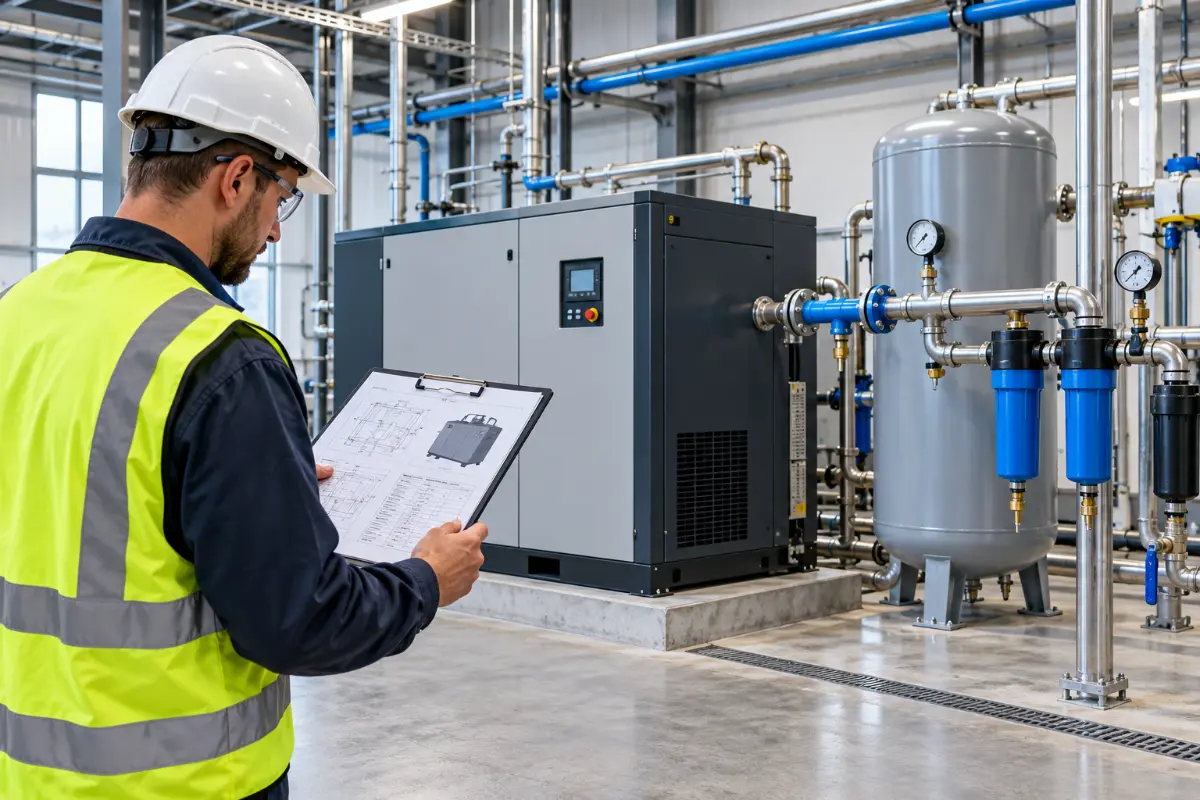
Final Buying Checklist Before Selecting a 75 HP Rotary Screw Compressor
Before approving a compressor purchase, I would recommend reviewing the entire compressed air requirement instead of making a decision based only on motor horsepower or initial quotation price.
A practical evaluation checklist should include:
Required airflow under actual production conditions
Working pressure requirements
Daily operating hours
Expected production expansion
Energy consumption estimation
Maintenance accessibility
Availability of technical documentation
Supplier engineering support
Compatibility with dryers, filters, and storage tanks
For this comparison, I’m prioritizing long-term operating suitability over short-term purchasing convenience. A compressor is usually expected to serve a facility for many years, so the selection process should consider the complete operating environment.
| Evaluation Area | Recommended Review Question |
|---|---|
| Air demand | Does the compressor deliver enough airflow at the required pressure? |
| Energy efficiency | How will operating costs change during normal production? |
| Technology selection | Does fixed speed, variable speed, or two-stage compression match the demand pattern? |
| Supplier capability | Can the manufacturer provide technical assistance and documentation? |
| Future planning | Can the compressed air system support future capacity changes? |
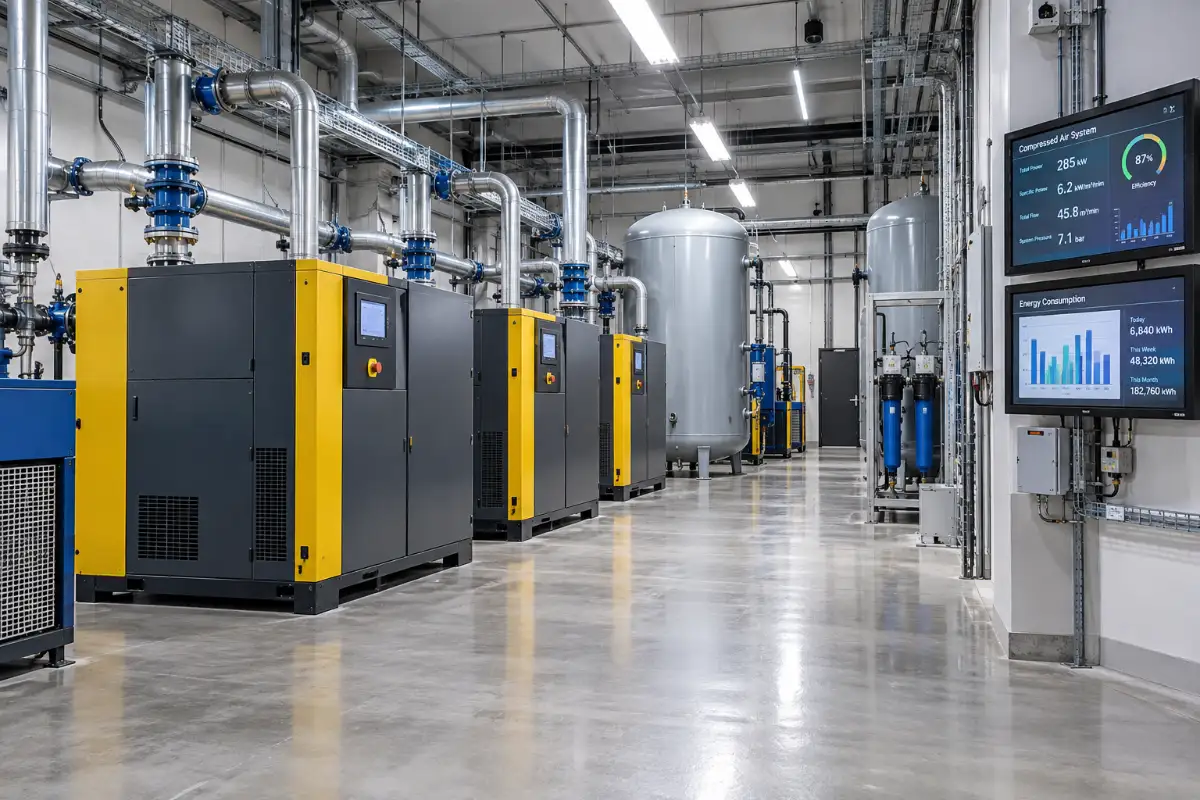
Frequently Asked Questions About 75 HP Rotary Screw Compressors
1. What is the typical airflow output of a 75 HP rotary screw compressor?
A 75 HP rotary screw compressor commonly produces airflow in the range of approximately 300 to 400 CFM depending on pressure rating, compressor design, motor efficiency, and manufacturer specifications. The correct selection should always be based on the required airflow at the operating pressure, not horsepower alone.
2. How much electricity does a 75 HP compressor use?
A 75 HP motor is approximately equivalent to 56 kW of rated power. Actual electricity consumption depends on operating hours, load percentage, control method, system pressure, and production demand. A variable speed compressor may reduce energy consumption in applications with significant airflow fluctuations, but the actual benefit depends on operating conditions.
3. Is a variable speed 75 HP compressor worth the additional cost?
A variable speed compressor can be suitable when compressed air demand changes frequently. Facilities with stable air consumption may not achieve the same benefit. I’d recommend comparing expected operating patterns, annual running hours, and energy costs before deciding.
4. What pressure should a 75 HP industrial compressor operate at?
Many industrial systems operate between approximately 100 and 175 PSI depending on equipment requirements. Higher pressure generally requires more energy, so I recommend avoiding unnecessary pressure increases unless the application requires it.
5. What accessories are required with a 75 HP screw compressor?
A complete compressed air system may require:
Air receiver tank
Air dryer
Filtration equipment
Condensate management system
Piping system
Monitoring controls
The correct accessory configuration depends on air quality requirements and production conditions.
6. How long can a 75 HP rotary screw compressor operate?
Service life depends on operating environment, maintenance quality, operating hours, and equipment design. A properly maintained industrial compressor can provide many years of operation, but manufacturers’ maintenance instructions should always be followed.
7. Should I choose an oil-injected or oil-free compressor?
The choice depends on the required air quality. Oil-injected screw compressors are widely used in many industrial applications. Industries requiring extremely strict air purity standards may require oil-free technology or additional air treatment systems.
8. How do I select a reliable compressor supplier?
I would evaluate technical capability, product documentation, engineering communication, spare parts availability, and the supplier’s understanding of compressed air systems. The best supplier relationship is based on correct system matching rather than simply offering the lowest purchase price.
Technical Sources and Industry References
The following references were used for general industry information and energy management principles:
U.S. Department of Energy, Better Buildings Industrial Technologies resources, Compressed Air Systems information (2024): https://betterbuildingssolutioncenter.energy.gov/industrial-technologies
U.S. Department of Energy, Compressed Air Challenge resources:https://www.energy.gov/eere/amo/compressed-air-systems
International Organization for Standardization, ISO 1217: Displacement compressors — Acceptance tests:https://www.iso.org/standard/84817.html
International Organization for Standardization, ISO 8573 compressed air quality standards:https://www.iso.org/standard/30822.html
About the Author Perspective
This article is written from the perspective of an industrial compressed air equipment editor involved in technical evaluation, equipment comparison, and supplier communication. The purpose is to help engineers, purchasing teams, and industrial decision-makers understand the practical factors behind compressor selection.
The information is intended for educational and planning purposes. Actual equipment selection should be confirmed with qualified engineers and the compressor manufacturer according to site conditions, operating requirements, safety standards, and applicable regulations.